When safety professionals talk to leadership about workplace incidents, they face a persistent challenge: How do you communicate the true financial impact when most executives only see what’s on the insurance claim? We recently posed this question to our Novara Connect customer community, and their responses confirmed what many already suspected – the visible costs are just the beginning.
According to the National Council on Compensation Insurance (NCCI), the average workers’ compensation claim costs $41,757, a figure that continues to climb year over year. But here’s what that number doesn’t capture: the productivity losses, the administrative burden, the equipment damage, and the ripple effects that can cost organizations millions more. Throughout this article, you’ll discover how experienced safety professionals have successfully quantified and communicated these hidden costs to their leadership teams – and why doing so is critical to building a proactive safety culture.
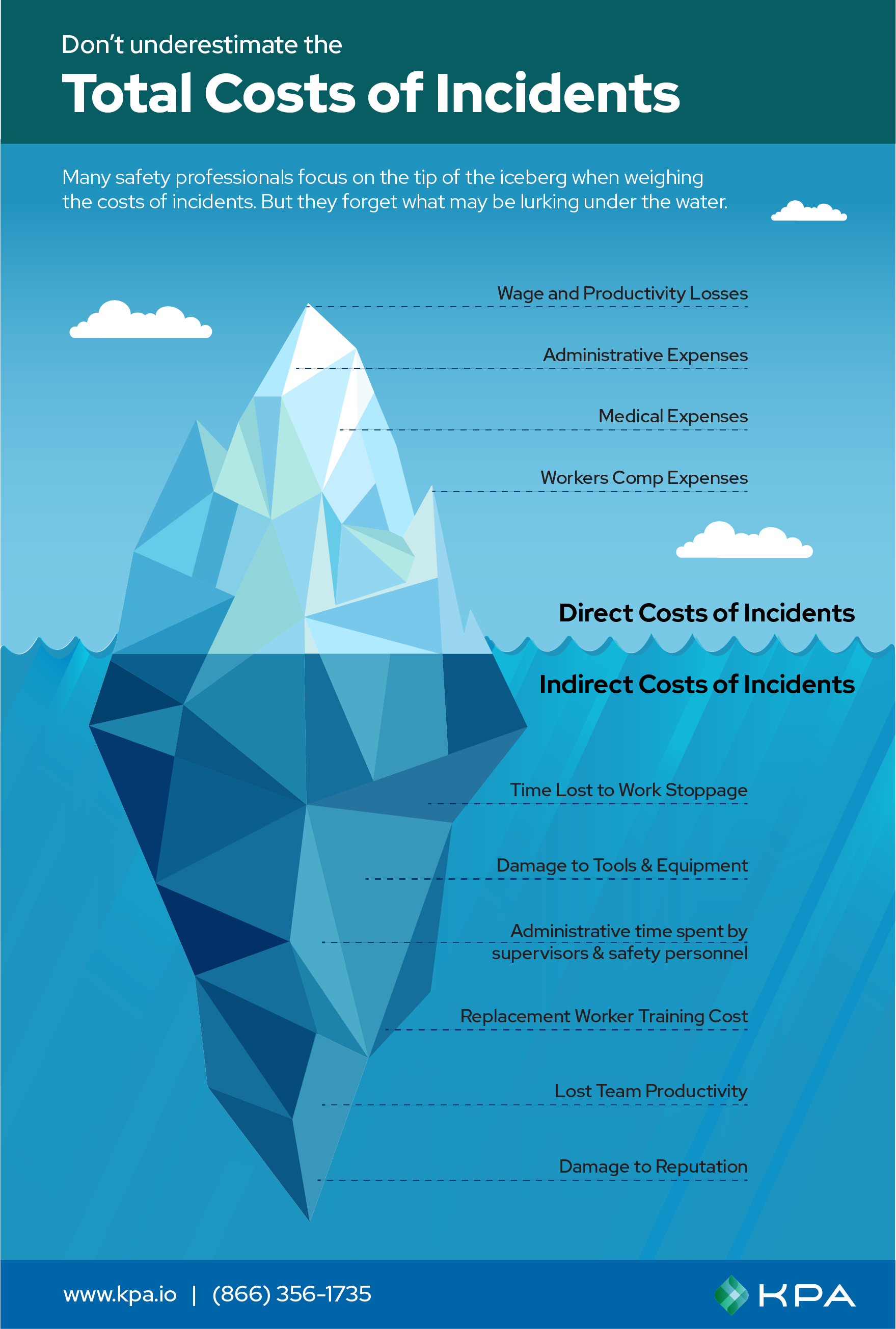
Understanding Direct Costs
The immediate, visible costs of workplace safety incidents typically fall into three main categories:

Hear From Your Peers - Real ROI Stories
Securing buy-in for digital safety management can be challenging. Join Tony Conte, EHS Manager at J. Mullen & Sons, as he shares his real-world experience implementing Novara Flex at two different organizations.
Hidden Costs: The Invisible Impact
What many organizations fail to recognize are the substantial indirect costs that can far exceed the direct expenses.
Pulling all of the financial metrics related to safety and injuries together so that Supervision can understand how much of an impact injuries can have. This includes work comp total incurred, work comp premiums, litigation fees, OSHA citation, the cost of lost time/restrictions, and the lost productivity. The number can grow very fast and allows people to see how this can affect the bottom line.
– Matthew Bailey, EHS Manager, Alleguard | Watch the Alleguard interview
Communicating the Financial Impact to Leadership
Our customers have found that data-driven approaches work best when communicating these costs to leadership.
Metrics, numbers are what they want to see.
– Aaron Baxter, Warehouse Safety Coordinator, Covenant Logistics
Metrics, data, data, and more data!
– Judy DeForeest, EHS & Quality Coordinator, LDX Solutions
Some have found success focusing on specific financial metrics:
Explaining EMR and the long-term impact that incidents have on insurance rates has helped bring several more departments into the conversation. It’s an actual number that means money instead of a TRIR which doesn’t mean much to anybody.
– Chris Gafford, EHS Manager, Ring Energy
While others recommend integrating safety costs into broader financial discussions:
“Discussing the financial impact of injuries during the corporate financial meetings with operations is powerful. It adds another line item they have to answer for and can really help show the impact compared to other operational costs.”
– David Finley, Executive Director of IT & OT, Dolese | Read the Dolese case study
The Real-World Impact: A Case Study
Using OSHA’s “Safety Pays” Calculator, let’s examine a real-world scenario. Consider a manufacturing company that experiences a single incident resulting in a contusion injury. With direct costs of $27,630 and an indirect cost ratio of 1.1, the total indirect costs reach $30,393. For a company operating on a 3% profit margin, recovering just the indirect costs of this single incident would require generating over $1 million in additional sales. This striking figure demonstrates how seemingly minor incidents can have major financial implications.

Track several key performance indicators in order to make decisions based on data and not just ‘gut’ feelings.
– Bill Woods, Director of Safety, Quality and Regulatory Compliance, American Welding & Gas
Read the AWG case study
Taking Action: Protect Your Workforce and Bottom Line
Don’t let your organization become another statistic. See how Novara Flex can help you identify and address potential hazards before they lead to costly incidents. Our comprehensive EHS software platform provides:
- Real-time risk assessment and hazard identification tools
- Automated preventive maintenance scheduling
- Streamlined training program management
- Digital compliance documentation and reporting
Remember: investing in workplace safety isn’t just about avoiding costs – it’s about protecting your most valuable asset: your people.
Communicating actual costs and risk management over time opens up room for more accurate and informed dialogue.
– Angela Mele, Environmental Compliance & Sustainability Supervisor, Dolese | Read the Dolese case study
Related Content
Explore more comprehensive articles, specialized guides, and insightful interviews selected, offering fresh insights, data-driven analysis, and expert perspectives.