Picture this: It’s 6 p.m. on a Friday. While other departments have gone home, your safety manager is still at their desk, toggling between spreadsheets, searching through emails for training confirmations, and trying to compile safety metrics from paper forms. Meanwhile, a night-shift worker needs to check the safety datasheet for a new chemical, but it’s buried somewhere in an email from three weeks ago.
This scenario plays out in countless organizations every day. We live in an era where AI writes our emails, algorithms predict our preferences, and we trust technology with everything from our bank accounts to our heartbeats. But when it comes to protecting our most valuable asset—our people—many organizations still operate like it’s 1995.
This paradox isn’t just inefficient. It’s expensive, risky, and increasingly unsustainable.
The Current State of Safety Management: A Reality Check
The Paper Problem That Won’t Go Away
Nick Hardesty, Director of EHS Field Services at Novara, has watched the safety industry evolve over his 23-year career. His reflection captures a reality many of us know too well:
When I started in the field, we were doing inspections with pen and paper on a clipboard, going back to the office, typing up minutes and inspections and sending those out. Literally we would e-mail those out to managers after our visits, if you can believe that.
Sound familiar? Despite decades of technological advancement, safety professionals still find themselves drowning in administrative tasks—time that should be spent in the field, building relationships, identifying hazards, and creating a culture of safety.
The hidden costs of this manual approach compound daily: lost productivity, delayed incident responses, missed opportunities for prevention, and frustrated employees who know there must be a better way.
The Growing Digital Divide
Right now, there’s a widening gap between organizations embracing digital safety and those clinging to familiar but inefficient processes. On one side, you have companies where:
- Safety managers spend their time mentoring workers instead of merging spreadsheets
- Real-time data drives proactive interventions before incidents occur
- Field workers have instant access to procedures, training, and hazard reporting
- Leadership has visibility into safety performance without waiting for monthly reports
On the other side? Organizations where safety data lives in silos, incidents are discovered days later, and preparing for an OSHA inspection triggers company-wide panic.
Which side of the divide is your organization on?

Why This Transformation Can’t Wait
The Business Environment Has Fundamentally Changed
Several forces are converging to make digital safety transformation not just beneficial, but essential:
Regulatory Pressure Is Intensifying: OSHA penalties continue to increase, with serious violations carrying substantial fines. More importantly, regulators expect modern safety management systems—paper trails aren’t enough anymore.
Insurance Companies Are Getting Smarter: Carriers increasingly offer premium reductions for organizations with proactive, data-driven safety programs. They know digital systems reduce claims, and they’re willing to reward that reduced risk.
Workers Expect Better: Today’s workforce grew up with smartphones. They expect the same ease of use and instant access at work that they have in their personal lives. When they can’t report a hazard as easily as they can post on social media, engagement suffers.
Competition Is Already Moving: While you’re debating whether to go digital, your competitors are already reaping the benefits. They’re winning contracts, attracting better talent, and operating more efficiently.
The Technology Has Finally Caught Up
Monica Patel, Product Manager at Novara, puts it perfectly:
In the past, managing safety across multiple projects and locations meant juggling a lot of siloed systems. So it meant slower emergency responses, it meant inconsistent documentation. It was really, really inefficient and it was hard to track and it was really difficult to measure success in real time.
But that’s changed. Today’s safety technology offers:
- Mobile-first design that works where safety happens—in the field
- Configurable platforms that adapt to your processes, not the other way around
- Seamless integration with your existing HR and operations systems
- Proven implementation frameworks based on thousands of successful transformations
Your Roadmap to Digital Safety Success
Over the next three articles in this series, we’ll give you everything you need to make digital transformation a reality at your organization. Each article addresses a critical aspect of the journey:
Know Where You Stand: The Digital Safety Program Readiness Assessment
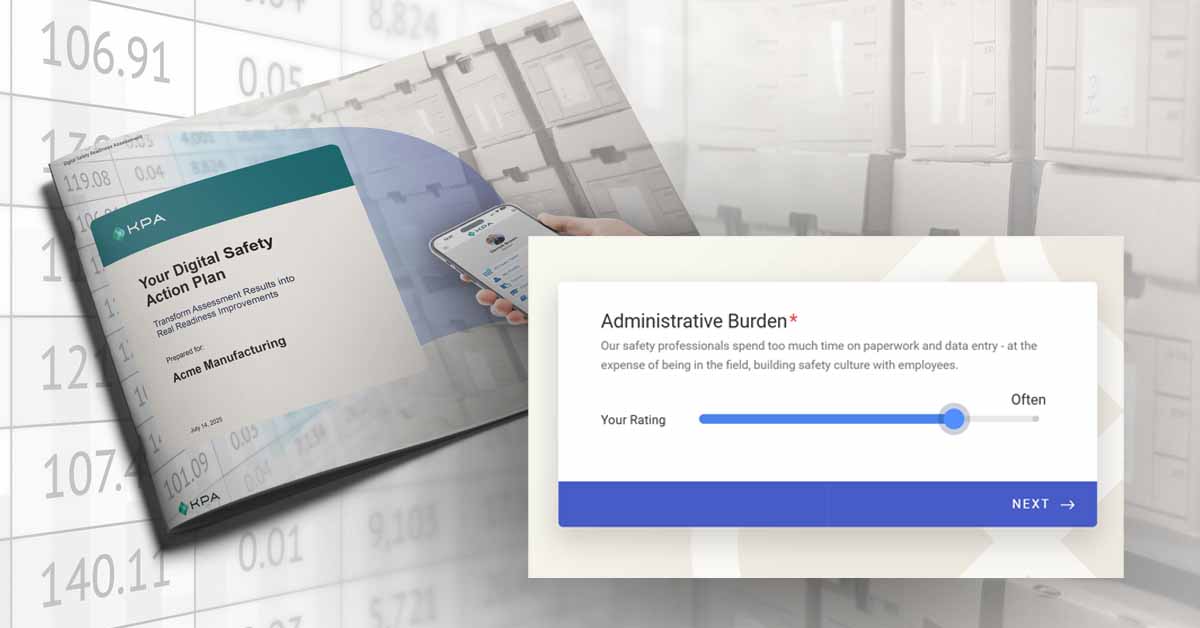
Before you can transform, you need to understand your starting point. That’s why we’ve created the Digital Safety Program Readiness Assessment—a comprehensive evaluation tool that measures your organization across three critical dimensions:
- Current Pain Points: How much is your manual system really costing you?
- Building Blocks for Success: Do you have the foundation for successful transformation?
- Ability to Sell the Vision: Can you make the business case to leadership?
This isn’t just another quiz. It’s a strategic planning tool that delivers:
- Personalized insights based on your specific situation
- Benchmarking against industry best practices
- A custom action plan with prioritized improvements
- Clear next steps for your digital journey
Ready to See Where You Stand?
Take the Digital Safety Program Readiness Assessment and get your personalized transformation roadmap in 5 minutes.
The Path Forward: Your Choice to Make
The Cost of Waiting
Every day you delay digital transformation is another day of:
- Unnecessary administrative burden draining your team
- Increased risk of preventable incidents
- Lost competitive advantage to digitally-enabled competitors
- Frustrated workers using outdated tools
- Money left on the table through inefficiency
The regulatory landscape isn’t getting simpler. Worker expectations aren’t lowering. Your competitors aren’t standing still.
The Opportunity Ahead
But here’s the good news: Organizations that make the leap to digital safety consistently report transformational results. They’re not just reducing incidents and saving money—they’re fundamentally changing how safety works in their organizations.
Imagine a world where:
- Your safety team spends most of their time in the field, not behind desks
- You can identify patterns and prevent incidents before they happen
- Workers actively engage with safety because it’s easy and accessible
- Leadership has real-time visibility into safety performance
- You’re confident and prepared for any regulatory inspection
This isn’t a fantasy. It’s the reality for thousands of organizations that have already made the digital transformation.
Your Journey Starts Here
Digital safety transformation isn’t just about technology—it’s about reimagining what’s possible when you free your safety program from the constraints of paper and spreadsheets. It’s about giving your team the tools they deserve and your workers the protection they need.
Over the course of this series, we’ll give you everything you need to make this transformation a reality. But it starts with understanding where you are today.
Take action now:
- Complete the Digital Safety Program Readiness Assessment
- Share this article with your leadership team
- Mark your calendar to read the complete series
In our next article, we’ll pull back the curtain on the true cost of manual safety processes. You’ll discover why that “simple” spreadsheet on your desktop might be costing your company far more than you realize—and what you can do about it.
The digital safety revolution is here. The only question is: Will you lead it or be left behind?
Start Your Digital Safety Transformation Today
Don’t wait another day to modernize your safety program. Take the free assessment and get your personalized roadmap to digital safety success.
Related Content
Explore more comprehensive articles, specialized guides, and insightful interviews selected, offering fresh insights, data-driven analysis, and expert perspectives.