If you’ve ever tried to implement new technology in a construction or field service environment, you know the challenges. Resistance to change, the “I don’t have time for this,” or varying comfort levels with technology, and fear that what works in the office won’t work in the field. These aren’t just minor hurdles. They’re often the reason why digital transformations fail or limp along with minimal adoption for years.
So, when I heard about a company that went from paper to digital and achieved a 95% adoption rate within their first year, with a 300% increase in safety reporting and field workers actually championing the change, I knew I needed to understand what they did differently.
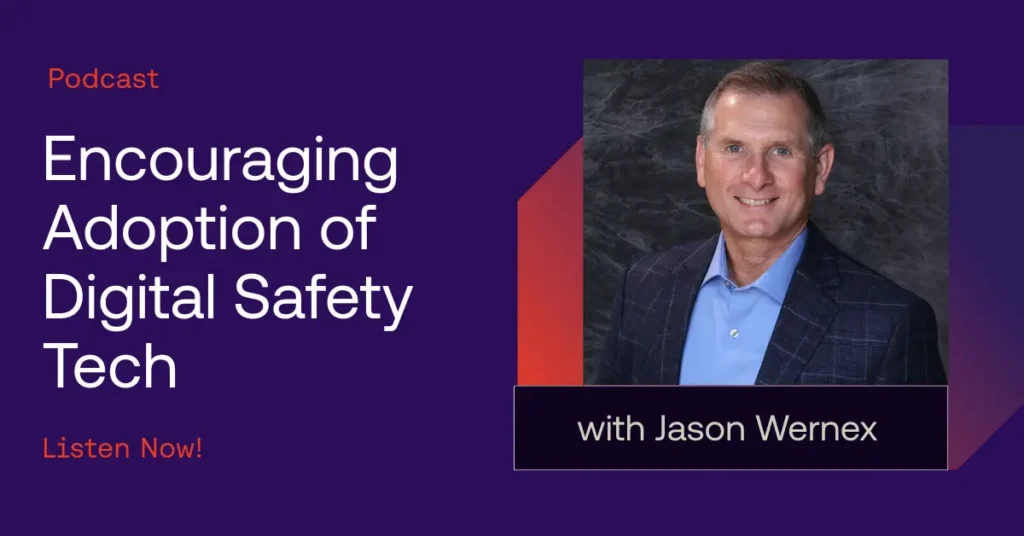
Jason Wernex is the Director of Safety at Utilitra, a 350-person engineering and construction firm based in the Midwest. With a mix of office and field workers, diverse customer requirements, and the usual challenges that come with construction safety, they faced the same obstacle many of you are facing right now. The difference is how they approached it. And today, Jason’s breaking down their entire strategy. Jason, thanks for joining us today. Before we dive into your transformation story, tell us a bit about Utilitra and your role there.
Yeah, great. We are a woman-owned business. We have quite a diverse portfolio of business, but it really boils down to predominantly three areas: engineering, technology, and construction, which means that we have a mixed population of workers as well. We have a lot of office-based employees as well as field-deployed employees. So, a lot of diversity in our workforce.
We’re headquartered in Edwardsville, Illinois, which is really just outside of St. Louis, Missouri. We’re just right across the river. We’ve got about 350 employees. We’re mostly concentrated in the Midwest, Great Lakes area. We do have some offices up in the Milwaukee area as well. Me personally, I’ve been in safety for about 30 years. For the last 20 years, I’ve been in the utility industry, also in the construction industry, and then prior to that was in transportation, distribution, and warehousing. So, that’s a little bit about me.
So, with 350 employees spread across engineering, technology, and construction, both office and field workers, that’s a lot of complexity. What was your safety program like before going digital, and what challenges were you facing that made you decide it was time for a change?
Yeah, we, you know, probably like a lot of companies, we were very paper-based. Our information systems were all kind of disjointed. So where we did have technology, we were using things like spreadsheets, very standalone processes. As I mentioned a minute ago, we have a mix of field workers as well as people that work in the office. So we were really looking for a solution that was going to be truly mobile for the people that needed it to be mobile, but then also had a good desktop experience for people that were going to be working in the office.
We also have a lot of diverse expectations from our customers. So we had different agreements that had different requirements, so we needed something that was going to be very flexible, that could build with us, that could grow with us. We’re growing rapidly, so that was also very important to us. And you know, with a lot of workforces, our technology understanding was kind of all over the board, and not just the office-based people would have a better understanding than the field-based. It’s not really that. It’s just we have different generations. We have some people that are very familiar, very comfortable with technology, and we have others that are not necessarily where they’re very comfortable. So those were all some of the things that we had to keep in mind as we were shopping around and looking.
As far as the criteria that we used when we were trying to decide where we wanted to go, user experience was king. And as I mentioned, we had to have flexibility. We really wanted configurability. We wanted to be able to make forms and make the system reflect our business. We didn’t want to be pigeonholed, and we really didn’t want our users to have to deal with a one-size-fits-all type of experience. So flexibility was very important to us.
We wanted to be a one-stop shop, so we wanted to have as much of the safety processes and resources in one place. And we wanted a truly mobile platform. We really didn’t want a situation where we were just using a website on an iPad or some kind of a mobile device. So those were some of the criteria and challenges.
User experience being king, flexibility, true mobile capability, those are all great criteria. Once you made the decision and found a solution that met those needs, how did you approach the actual implementation? What was your strategy for rolling this new tech out?
Sure. So one of the things that we did and we just committed that time up front to make sure that we were putting the amount of effort into it that we thought was necessary. It’s like anything, right? You get out what you put in. So we really wanted to make sure that we set aside time up front to be able to get everything switched over or get our information uploaded, etc.
The other thing that we did is I paid attention to my implementation manager. Jem Dyer is who I worked with. She’s really, really good at what she does, but she kind of helped lay out the roadmap and tried to help. Well, she listened to what we were trying to accomplish and then really helped us put together a plan that was going to make sense. And we were just diligent with it. We really stuck to it, took the time to do things right, made sure that we had our system set up in a way that was going to work for us in the long term. We tried to have a longer-view approach to how we were going into this whole project as we wanted to try to think out a few steps ahead. So that was really important going in.
As far as when we started implementing into the field, you know, we really wanted to take the processes that were most familiar to people and digitize them. And so what we were trying to do is we didn’t want to introduce a completely new process as well as a new technology at the same time. So we chose to roll out things that were going to be really familiar to the workforce.
So we actually chose to start with good catch near-miss reporting. Paper-based prior to Flex, that was a paper-based process, emails, things like that. But it was something that people were familiar with doing. And so we started there with Flex. The other one that we started with right off the bat was auditing. Another thing that people were familiar with doing. It was cumbersome, and they were really looking forward to seeing if this technology was going to make doing those things easier. They saw the value in doing it, but they didn’t necessarily always appreciate the way that it was being done. So that’s where we started, and we did that so that it was going to be familiar with people, and really the only thing that they were going to be learning was how to do it in a new technology.
Starting with familiar processes like near-miss reporting and audits makes a lot of sense. You’re not overwhelming people with new technology and new processes at the same time. But you also mentioned being strategic about which groups you rolled it out to first.
Yeah, we picked the groups that we thought would adopt well and would be good ambassadors, and we started working with them first.
Okay, what happened next? How did adoption spread from there?
Yeah, so when we first turned the system on, we picked certain groups and we turned it on, showed them how to do the good catch near-miss for example in Flex, and that was really in the beginning, that was really as far as I thought it would go. And when you’re building out your forms in Flex, you can build forms and they can sit behind the scene and people can see them unless you hide them.
And what we found real quickly was that they didn’t just go in and start using good catch near-miss forms. They started looking around and they found other forms that were for other processes they’d been doing manually, and people started using them. So it was a surprise because we didn’t expect I didn’t expect people to be doing that. But that was kind of the first inclination that the rollout was going to go pretty well because the people were comfortable right off the gate, you know, to go out and look for forms and look for solutions really without anybody showing them or telling them. So if forms weren’t quite ready to be used, I had to start hiding them because people would find them and start using them.
So we had really good acceptance right out of the gate. The other thing that happened was we started getting good adoption in the field, and then almost immediately when the field workers when they started using the system, they started coming up with, “Hey, can we do this? Can we do that? Can you change this?” So again, that started telling us pretty early on that people liked what they were seeing.
Hold on, let me get this straight. So people were finding forms you hadn’t even shown them yet and they just started using them? That’s remarkable. Most organizations face at least some resistance when moving from paper to digital. You said you had about 90 to 95% positive adoption. What do you think made the difference for you at Utilitra?
I think some of what led to that is people gave it a try and fortunately, some of our I think some of our success was luck. We picked things intentionally and it worked out. But I think when people had that first two or three experiences and the system didn’t lock up, they didn’t need to have a checklist on how to use the system, they could just figure it out. I think that took down a lot of barriers.
And we have had meetings where I’ll talk a little bit about the system and what we have working in the system now and things like that, and it’s so helpful to have a peer that doesn’t have a stake in the I’m selling it, they’re just using it. But to have a peer say, “I’ve used it, I really like it, here’s what it can do for you,” that sort of thing. When you have other people that are helping you generate that excitement, that’s very powerful, much more powerful than what I’m able to try to generate. So goes back again to that user experience. I really think that people felt comfortable talking to their peer, “Give this a try,” because they didn’t feel like their credibility was going to be damaged. And that had a lot to do with it.
Yeah, that peer-to-peer advocacy is powerful. When someone who’s actually using the tool says, “Give this a try,” that carries a lot more weight than when it’s coming from management. It sounds like that momentum really built on itself. Tell us about how this evolved beyond just those initial safety processes.
Yeah, I mean, it really did. We started to get these new use cases. I had a couple managers in manager meetings talk about their experience early on, which got other managers asking more questions, wanting to know about the capabilities of the system. And from there they started thinking about outside of safety. “Can we use the system to do other things besides just safety?” which I didn’t anticipate that as well.
We also have our engineering group that has a lot of tools, things like that that have to be calibrated, they’re checked in, checked out, just assets that have to be managed. So early on being able to use a QR code on some of the systems really made their jobs easier. And again, I embraced that early on because when they were coming to me saying, “Can we do this? This is stuff we’re interested in doing,” we tried to accommodate that. That’s really how we kind of approached it.
Okay, so managers were coming to you asking you how they could use this for non-safety processes. That’s quite a shift from the typical technology rollout. Where did you end up? Walk us through what you’re managing digitally now.
Yeah, I mean, anything that most people would think about in their safety processes. We use the system for it. So I mentioned good catch near-miss reporting and auditing. We do incident investigation, record keeping. The nice thing about incident investigation, you can set up workflows so that you can have an initial report that’s maybe filled out by a foreman or supervisor and they’re capturing a certain amount of information, and then it pushes the next step to another party to take it from there. So it’s very nice that you can use the forms in a way that kind of flow through a process, if you will. So that’s very helpful.
Our training delivery compliance, I haven’t really hit on that too much, but that was also a big win for us. We can either do things in person and then basically sign off and do mass sign-offs by rosters, things like that, still using the system. Or if you maybe have kind of a mixed bag where you could do things in person, but then you maybe have a few people that need to do a computer-based, you can assign the training to all those people, and then you can use the system to get it all accomplished.
Equipment inspections, just a quick example, we had an idea where we could basically set up a bunch of customer information in the system. And what that did was when the technician in the field was actually going to the job site to do the work, they were able to start typing in the address. And if the address was coming up, then they were at the right place, and that was because we pre-loaded all of that. So it helped make sure that they were in the right place.
The other thing that because we had set it up that way, the other thing that happened was when they were using the forms to collect information that the customer wanted and then also that we needed for billing purposes, it put it all together with that address. So it really helped the operations folks manage their process. It helped them with billing. They were able to really I mean I set up a automated report that went to them every Monday so billing was really easy for them. So again, the kind of the whole theme to this was we were trying to solve challenges that people have in their normal processes. We were just trying to make it easier, more streamlined, and make the technology something that they wanted to use, and I think that helped with the adoption.
Wow, that’s really impressive. From safety processes to billing and operations, you’ve really made this an essential hub for your field operations. So, how did this transformation affect your safety culture at Utilitra?
I think it brought the whole kind of safety function quite a bit forward. I think people realized that you know, I mean we always have taken safety seriously. It’s not that the system automatically made us care about safety. That’s not true. But I think that the investment, making the tools available to people, there’s a tremendous amount of resources that you can put in the system that just literally puts information that people need right in their hands. I think all those things just kind of helped continue to back up that what we’re saying we actually need. So I think that alone was important.
I mentioned the feedback that we get from people. Those are things that are kind of hard to measure, but having a foreman call you I just had this happen right before Christmas, but he called me to tell me pretty excited called me to tell me that the general contractor, the GC for the site, had stopped by his job site and wanted to see their JSA, job safety analysis. He was able to pull it up, show it to him, they were really impressed by it, had a bunch of questions, he was able to explain it.
So he’s a technology guy, he’s one of my early adopters, so full disclosure. But seeing that excitement was that’s the type of stuff that’s hard to put a metric to exactly, but you know, is really important. So I think that was a big part. I think the other thing that has helped is just the transparency of reporting, like in our good catch near-miss reporting has gone up. So when people see that what they’re doing means something and it’s not hard to do, they’ll do it. So I think all those things just kind of helped drive the culture. And again, we wanted the user experience to be good. We knew that if we had a system or process that we were making people use that we tried to make it as easy as we could. It’s not been all rainbows and puppies, but overall it’s been very good. It’s been really good.
I love that story about the foreman calling you and being excited because he could pull up the JSA on his device and impress a general contractor. That’s exactly the kind of cultural shift you want. Looking back at everything you’ve accomplished in your first year, what would you say are the keys to your success?
You know, as I mentioned we really started off with things that were familiar to people so that they could adopt technology and not necessarily have to adopt technology and new processes at the same time. You know, we just we took our time to try to make sure that we did things the right way, tried to have more of a longer view in what we were doing so that maybe it would have been more expedient to go one way, but longer term it would be better if we did something else. So we took the time to try to set it up for the longer term.
I’ve said it a bunch, user experience was king. We never lost sight of that, we still haven’t lost sight of that. I learn so much from the people that use the system. Made an adjustment this morning actually based on some feedback that we got. So you know, I think really empowering the people that use the tools, recognize that they’re the customer in this, and respond quickly. You know, we didn’t get everything right, I certainly learned things along the way. I made mistakes when I was assigning stuff, whatever the case may be, but you know, just we responded very quickly. If we messed something up, we fixed it.
And the other thing that was I didn’t hit on this too hard, but we didn’t want people even within our own organization to get forced into a one-size-fits-all. So the way that we have our system set up, it’s very configurable. But the experience that the one division’s JSA for example, some of the things that they can pick from in their list is tailored to their need. So you don’t get one list that has 500 things to pick from. You get a list of items that looks like things that matter to you. So flexibility over rigidity I think is really important. And then we’ve just continued to problem solve. And our team, our company’s willingness to give this a try, to give me a try and give the tool a try, you know, I think that the success is really theirs. They bought in and tried, so it worked. It worked out.
Those are great insights. User experience is so important, flexibility over rigidity, responding quickly to issues. I know how big those things can be for a field team. But I’m sure not everything went perfectly. If you had to do it all over again, is there anything that you would do differently?
Yeah, the changes that I would do would have been more APIs right off the bat. So we have an API set up with our human resource system. So when somebody comes into the company, a lot of their employee information just automatically goes in the system. I would do more with APIs early on, like with our customer some of our customer data, job numbers, assets, things like that that we’re going to be doing this year. I probably would have just done that right from the onset, and I think we’d be even further down the road.
So that’s something I would have done, which kind of gets into the be a little bit more ambitious early. I clearly underestimated the speed at which people are capable of adoption. I think I coddled in my own mind I was thinking that we had to kind of go maybe a little bit slower than we needed to. So it’s a balance. I wouldn’t go breakneck speed just to say that you got there fast. But you know, I probably could have gone a little bit quicker.
Yeah, more API integrations up front and being a bit more ambitious with the rollout pace, that all makes sense. So, as we wrap up, what’s the best advice that you can give other safety professionals in your seat who are staring down a similar transformation and wanting to move away from paper and into digital?
Yeah, technology being intuitive, I think that’s key. And that just leads to the other thing that I think is key which is the end-user experience. You know I mean once people kind of start seeing what’s possible, once you kind of light the fire, being able to feed it and keep the excitement, keep people engaged, listen to them, those types of things. It really does empower innovation and people have come up with ideas that I would have never thought of on my own. So that’s been a really big help to this whole journey.
And then time to value can be fast. Asking ownership for this type of an investment, taking the time that it does take to implement and purchase iPads and things like that to enable all these things, it’s been really nice to be able to show that value quickly. You know, we’ve gotten a really good response, like I’ve mentioned. We’ve seen improvements across a lot of our metrics. Our compliance has definitely improved. Just being able to show the value immediately was a bigger relief for me, I can tell you that personally. So it’s just been good. It’s been really good.