Welcome to the Novara Game Changers Series. Each month, we’re spotlighting customers who are rewriting the rules of safety management—achieving results that challenge conventional wisdom about what’s possible with EHS technology. These are real stories from real safety professionals who refused to accept the status quo.
We’re kicking off with Utilitra, our winner of the Flex Rookie of the Year award. As a certified Woman-owned business specializing in engineering, technology, and construction for the utility sector, Utilitra faced a challenge familiar to many: a small safety department, diverse customer requirements, and field workers scattered across multiple job sites. The conventional playbook said modernizing safety would take years. Utilitra had other plans.

What they accomplished in less than a year? A 300% increase in good catch and near-miss reporting. A 200% improvement in field auditing. And perhaps most impressively, field workers who actually wanted to use the system.
Here’s how they did it.
The Starting Point: Paper, Excel, and a Growing Problem
Before KPA Flex, Utilitra’s safety processes looked like most in the construction industry: paper forms, Excel spreadsheets, and disjointed systems that didn’t talk to each other. Field audits happened on clipboards. Near-miss reports got filed—somewhere. Training records lived in binders. And getting a clear picture of safety performance across projects? That required manual data entry, follow-up calls, and a lot of patience.
For Jason Wernex, Utilitra’s Director of Safety, this wasn’t just an efficiency problem—it was a visibility problem. With workers spread across diverse utility sector projects, he needed real-time insight into what was happening in the field. He needed faster issue identification. And he needed a system that his team would actually use.
Ready to Change the Game?
Jason Wernex is sharing Utilitra’s complete first-year story in an upcoming webinar. You’ll hear directly from him about the selection process, implementation approach, adoption strategies, and lessons learned—plus get your questions answered in a live Q&A.
Register now for ‘From Rookie to Rockstar: Utilitra’s First-Year Safety Transformation’
Why Speed Mattered: No Room for Multi-Year Implementations
Utilitra is a growing company, and they needed a safety solution that could scale with them. But beyond scalability, there was a practical reality: field workers have expectations.
“We did not want a tool that was basically a website that would work on an iPhone or iPad. We wanted mobile-first type technology.”
– Jason Wernex, Director of Safety, Utilitra
Jason had been through this before. In previous roles at major organizations, he’d rolled out well-known safety tools. The pattern was usually the same: lengthy implementations, extensive training programs, ongoing resistance, and adoption that never quite reached critical mass.
This time needed to be different.
The Game-Changing Decision: The iPhone Principle
When evaluating safety software, Jason applied what we call the iPhone Principle: if the tool isn’t intuitive enough that workers can pick it up and start using it without extensive training, it’s not the right tool.
Think about it. Nobody reads a manual before using their smartphone. Users tap, explore, and figure it out. That’s the user experience standard your field workers live with every day. Safety software that requires hours of training and constant support isn’t just inconvenient—it’s fighting human nature.
When evaluating software options, Jason took an unconventional approach:
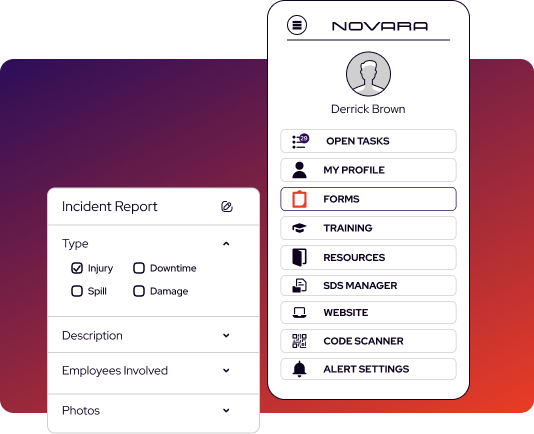
“I asked to have access to the tool. I didn’t want any instruction—I just wanted to have access to it. Because when you get an iPhone out of the box, you just turn it on and figure it out. And I wanted our system to be that intuitive.
If the tool is not intuitive, it’s not easy to use, the decision’s going to be made to not use it.”
– Jason Wernex, Director of Safety, Utilitra
Utilitra selected KPA Flex specifically for its flexibility and what they believed would be an intuitive, positive end-user experience.
Fast Implementation Strategy: Starting with What’s Familiar
Here’s where Utilitra’s approach gets interesting. Instead of trying to deploy every feature at once, they started with forms that workers already knew—just in digital format. Auditing forms. Good catch and near-miss reporting. The same processes, the same workflows, but now on a mobile app instead of paper.
This wasn’t about limiting the technology. It was about building confidence and trust.
“It really led to early success for people. Immediately they had confidence and they had trust in the system. That was huge.”
– Jason Wernex, Director of Safety, Utilitra
The implementation itself was collaborative. Jason worked with KPA’s implementation manager Jem Dyer, meeting regularly over several weeks to move legacy data into the system and set up proper foundations. The goal wasn’t just to get the technology running—it was to ensure the user experience would be positive from day one.
The Mobile App Advantage: Immediate Field Adoption
What happened next surprised even Jason.
He’d anticipated needing structured training sessions for the mobile app. He’d prepared a communication plan, sent out information about what was coming and why, and started planning formal training. But when they turned the system on and workers downloaded the app, something unexpected happened.
“This was a surprise to me. I really anticipated that we were going to have to do more structured and intentional training on the mobile app. What I quickly found was 80 to 90% of the users, as soon as they had the mobile app, they just started clicking and they knew where to go from there.”
– Jason Wernex, Director of Safety, Utilitra
For the small percentage who needed a little more help, it wasn’t really training—it was more of a jump start. Once they saw how the functionality worked and recognized the patterns, that was all it took.
The mobile-first design made all the difference. But perhaps more importantly, workers started talking to each other.
It wasn’t me trying to sell it. They were just talking to their coworkers. It solved problems for people.”
– Jason Wernex, Director of Safety, Utilitra
That organic, peer-to-peer adoption—workers genuinely recommending the tool to each other—drove field acceptance in a way no training program ever could.
Results in Months, Not Years
Within their first year with KPA Flex, Utilitra achieved measurable results that typically take organizations much longer:
300% increase in good catch and near-miss reporting — and not just more reports, but more diversity in who was reporting. Workers who had never submitted a report before started participating.
200% improvement in field auditing — exceeding their goals and providing real-time visibility into safety conditions across projects.
Faster issue identification and resolution — problems that used to take days to surface now appeared immediately.
Training compliance at its highest level ever — with centralized, easy access for all workers.
A backlog of user-requested capabilities — When your field workers are asking for more functionality, you know adoption is real.
“The demand’s outpacing our ability to build it. We actually have a backlog!”
– Jason Wernex, Director of Safety, Utilitra
What Makes a Game Changer
Utilitra’s story reveals a principle that applies far beyond their organization: the right user experience drives rapid adoption, and rapid adoption drives results. It’s a simple formula, but one that most organizations get wrong.
When technology is truly intuitive, you don’t have to force people to use it. You don’t need elaborate change management programs or ongoing training sessions. Workers adopt it because it makes their lives easier. And when workers adopt technology willingly, the data flows, visibility improves, and safety outcomes follow.
“The user experience—I can’t overemphasize how important that was to us. That positive user experience, that’s 90% of the battle.”
– Jason Wernex, Director of Safety, Utilitra
The commitment to a tool can’t be forced. The quantitative metrics—300% here, 200% there—only tell part of the story. The real success is qualitative: field workers embracing technology, project managers finding operational uses beyond EHS, and a safety department that’s no longer chasing paperwork.
Ready to Change the Game?
Jason Wernex is sharing Utilitra’s complete first-year story in an upcoming webinar. You’ll hear directly from him about the selection process, implementation approach, adoption strategies, and lessons learned—plus get your questions answered in a live Q&A.
Register now for ‘From Rookie to Rockstar: Utilitra’s First-Year Safety Transformation’
Next in the Game Changers Series: We’ll dive deeper into how Utilitra achieved remarkable acceptance across both office and field workers—and what that means for organizations struggling with technology adoption.
Related Content
Explore more comprehensive articles, specialized guides, and insightful interviews selected, offering fresh insights, data-driven analysis, and expert perspectives.