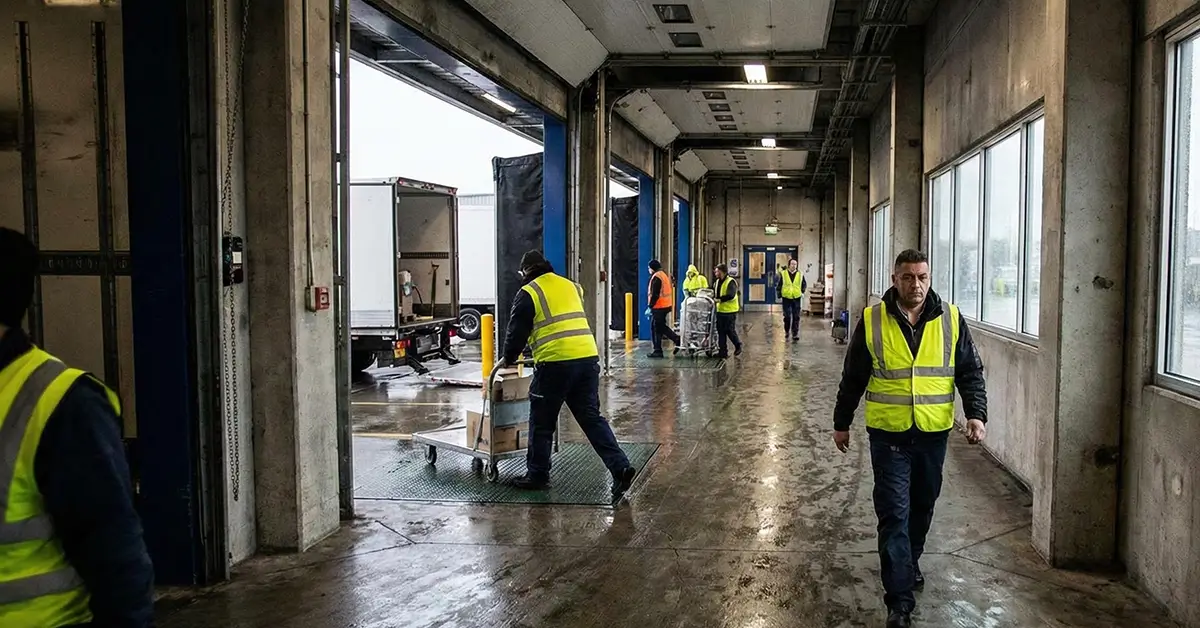
Your dashboard shows a spike in maintenance incidents at Plant 3. You pull together a team, dig into the data, and schedule additional training. But by the time you see that spike, three workers are already injured and production has been down for two days.
What if you’d known three weeks earlier that maintenance tasks were being rushed during shift changes? That specific equipment was generating an unusual pattern of near-misses? That the combination of overtime hours and weather conditions was creating a perfect storm for incidents?
That’s the difference between reactive reporting and predictive intelligence. And it’s the difference between managing your EHS program from behind and actually getting ahead of problems before they hurt people or disrupt operations.
The Dashboard Limitation
Let’s be clear: dashboards aren’t the problem. They do important work. They give you historical reporting, trend visualization, and KPI tracking. They help you document compliance, compare performance across sites, and generate reports for leadership. Every EHS program needs these capabilities.
But dashboards have a fundamental limitation: they only tell you what already happened.
Consider a common scenario. Your dashboard shows that slip, trip, and fall incidents account for 43% of your total recordable incidents. That’s useful information. But what do you actually do with it? You might launch a general awareness campaign, or add more floor mats, or schedule refresher training on walking surfaces.
Here’s what your dashboard doesn’t tell you:
- Which specific locations have the highest concentration of these incidents
- What time of day they’re most likely to occur
- Which environmental conditions correlate with the spikes
- Whether certain crews or shifts are more affected than others
- What changed recently that might explain an uptick
This is the cognitive gap between data visualization and actionable intelligence. Your dashboard shows you the “what” after the fact. What you need is the “why,” the “where,” and the “what’s coming next” before someone gets hurt.
There’s also a time lag problem. By the time a pattern shows up clearly on a dashboard, you’ve already accumulated enough incidents to create that pattern. You’re seeing problems after they’ve become trends, not while they’re still emerging signals you could address.
Measure What Matters eBook
Your guide for establishing effective safety program KPIs. As organizations continually strive to improve their safety standards, the role of Key Performance Indicators (KPIs) in shaping an effective safety program is more crucial than ever.
The Three Levels of EHS Data Analysis
To understand where predictive intelligence fits, it helps to think about EHS data analysis in three levels. Most organizations operate at Level 1, some have moved to Level 2, and a growing number are discovering what’s possible at Level 3.
The goal isn’t to replace your judgment. It’s to give you the information you need to make better decisions before you’re managing a crisis.
This is the level where EHS programs shift from reactive to proactive. And it’s where AI excels.
Real-World Predictive Intelligence Scenarios
Abstract concepts are useful, but let’s look at what predictive intelligence actually does in practice. These scenarios illustrate how AI connects data points that humans simply can’t process at scale.
The Continuous Improvement Loop
Predictive intelligence isn’t a one-time analysis. It’s a continuous loop that gets smarter over time.
- Predict: AI identifies emerging risk patterns across your data sources. These aren’t just historical trends—they’re forward-looking signals that indicate where problems are developing.
- Prevent: Based on those predictions, you implement targeted interventions before incidents occur. This might mean scheduling maintenance, adjusting staffing, updating procedures, or addressing specific hazards.
- Respond: When incidents do happen—and they will, because no system is perfect—you respond faster and more effectively because you already have context. You know this was a known risk area, what interventions were in place, and what additional factors might have contributed.
- Learn: The outcomes of your interventions feed back into the system. Did the maintenance schedule change reduce equipment-related incidents? Did the targeted training improve compliance rates? This feedback improves future predictions.
- Repeat: The cycle continues, with each iteration making the predictions more accurate and the interventions more effective.
Building this loop requires integration with your existing workflows. The best predictive intelligence systems work where you already work—desktop and mobile, connected to your existing EHS management platform. They provide real-time data capture, automated alerts for high-priority patterns, human validation and feedback mechanisms, and continuous model refinement based on results.
What This Means for Your Role
The shift from reactive dashboards to predictive intelligence changes what’s possible in your role—whether you’re running operations, managing risk, or leading EHS programs.
Across all these roles, the fundamental shift is the same: from reactive firefighting to proactive program design. You’re not waiting for problems to find you. You’re finding them first.
The Evolution, Not the Revolution
Moving from reactive dashboards to predictive intelligence isn’t about throwing away everything you’ve built. Your dashboards still matter. Your historical data is valuable—in fact, it’s the foundation that makes AI analysis possible.
This is an evolution, building on what you already have. The difference is what you can do with your data once AI is analyzing it. Instead of seeing what happened, you see what’s coming. Instead of hoping your interventions work, you measure their impact. Instead of spreading resources thin across all possible risks, you focus on the ones that actually matter.
The organizations that figure this out first won’t just have safer workplaces. They’ll have more efficient operations, lower costs, and competitive advantages that compound over time.
That’s the future of EHS data analysis. And it’s here for organizations ready to make the shift. Ready to move beyond reactive dashboards? See how predictive intelligence can transform your EHS program.
Related Content
Explore more comprehensive articles, specialized guides, and insightful interviews selected, offering fresh insights, data-driven analysis, and expert perspectives.