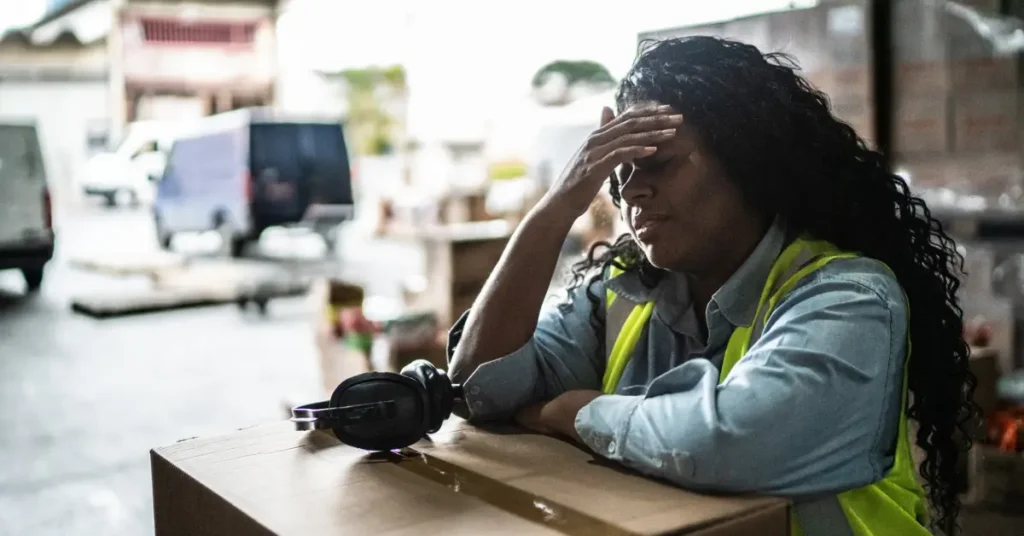
When the temperature rises, the chance of job site incidents rise with it. Nicolette Hill is the Safety Administrator at Gallo Mechanical, a commercial HVAC and plumbing contractor operating across the Gulf South and up through the Carolinas. With four years in safety and an OSHA 510 certification, she manages training, risk management, and compliance across a nearly 800-person workforce. This includes leading the company’s Heat Illness Prevention program, known as HIP.
Gallo Mechanical operates across 16 regional offices and more than 90 job sites. Managing safety at that scale is hard under any conditions, but when heat index levels routinely exceed OSHA’s high-danger threshold it’s something else entirely.
Before formalizing their HIP program, Gallo was running safety on paper Job Safety Analysis (JSA) sheets. Forms arrived from their 90-plus job sites in varying conditions, with no reliable way to verify whether they were completed, no real-time insight into headcounts, and no centralized view of the conditions in which crews were actually working. Safety leadership had weather apps, but what they didn’t have was a unified program.
“We had no centralized visibility. We had no reliable way of knowing what was happening in the field with our employees, and we wanted to be more proactive about keeping everyone on the job site safe.”
– Nicolette Hill, Safety Administrator, Gallo Mechanical
The summer of 2024 brought extreme heat to Gallo’s primary operating states, making the need for a heat safety program impossible to ignore. That’s when Hill formalized what is now known as HIP.
HIP: Heat Illness Prevention
HIP stands for Heat Illness Prevention, but Hill is quick to point out a second meaning: hydration is planned. And then there’s the tagline she uses with crews:
“If we use HIP, we can keep you off a HIPAA form.”
– Nicolette Hill, Safety Administrator, Gallo Mechanical
The name isn’t just memorable. It reflects the program’s philosophy: prevention is proactive, visible, and something that every employee owns.
Hydration is central to the HIP approach. Staying hydrated is one of the most effective ways to prevent heat illness, and the HIP program focuses on ensuring crews have planned hydration breaks as well as plentiful access to water.
With crews spread across dozens of job sites, Gallo’s team partnered with its purchasing department to make sure every site had liquid IVs, water, and ice. They also sourced fans for employees working on elevated platforms or scissor lifts.
But having the right resources is only half the battle. Knowing how to use them—and how to recognize the early warning signs of heat illness—is crucial for workers to beat the heat and protect themselves.
Training as the Foundation
Hill built consistent, hands-on training into Gallo’s HIP program. During summer months, Toolbox Talks become a priority forum not just for information, but for putting eyes on each worker.

Heat Illness Checklist
Are you doing enough to keep your employees safe from summer heat? Get this helpful checklist with some practical ways to plan for and prevent heat-related illnesses at your business.
“One of our core values at Gallo Mechanical is looking out for your fellow worker. We want every employee to recognize the signs of heat exhaustion, heat cramps, and heat stress before they escalate.”
– Nicolette Hill, Safety Administrator, Gallo Mechanical
That focus on early warning signs is vital. Acclimation, Hill emphasized, starts with awareness. The earlier a worker recognizes the signs of heat illness, the easier it is to remedy. If employees understand what heat stress looks and feels like in its early stages, and if supervisors are trained to watch for it, interventions happen before incidents do.
For new employees, or those transitioning into roles with greater heat exposure, supervisors manage acclimatization manually, accounting for the heat index, the environment, and the specific conditions of the work area. The JSA provides the structure for this: before work begins, supervisors confirm how many people are on site, where they’re working, and what the current heat index is. By building those questions into the pre-work process, control stays with field leaders who are actually there and can act on what they see.
The Daily JSA as a Heat Check
One of HIP’s most practical innovations is the way heat awareness is embedded directly into the daily JSA. Rather than treating heat as a separate concern, Gallo built it into the form employees are already completing before any work begins.
The JSA prompts employees to think through their scope of work and identify relevant hazards. Are they working on an elevated platform? On a roof? In a confined room with an HVAC unit blowing high heat? Based on their answers, the form will provide the heat safety measures they need to apply.
Additional heat-specific fields ask employees to confirm hydration, note whether the heat index exceeds a set threshold, and indicate whether they’re taking regular breaks. In 2024 alone, Gallo received over 1,600 form submissions across all regions.
Heat checks are built into Gallo’s vehicle inspection form as well, as repeatedly getting in and out of a vehicle on a hot day contributes to heat exposure.
“We wanted to make sure they were thinking about it… and that they knew we were thinking about it too.”
– Nicolette Hill, Safety Administrator, Gallo Mechanical
A Policy Is Only as Good as Its Execution
One of Hill’s most important moves was building a workflow in Novara Flex that notifies managers when a JSA hasn’t been submitted within a 24-hour period. Previously, gaps in form submission were invisible. A form might not arrive, and no one would know until a safety audit surfaced the problem weeks later. With the automated notification, a missing JSA triggers an immediate prompt for the manager to reach out, have a coaching conversation, and find out what happened.
“Without Novara, we wouldn’t know. We’d assume everything was fine. With Flex, we have an active identifier so we can ask, ‘What’s going on, and how can we help? ‘”
– Nicolette Hill, Safety Administrator, Gallo Mechanical
Hill also uses Flex’s Notices feature to send real-time messages when a high heat index day is forecasted. Employees see them immediately when they open the platform, without waiting for a push notification. These notices don’t just flag the risk; they also reinforce that Gallo is committed to giving workers the tools and resources they need to stay safe.
Data That Tells the Real Story
Because Hill and her team monitor the entire HIP program through Novara Flex, they have a complete view of the effectiveness of the program and the health and safety of their team members.
When a Gallo foreman experienced a heat-related illness, Hill used the data in Novara Flex to reconstruct what had happened. She was able to see that the job site had conduct a Toolbox Talk on heat illness prevention and properly trained employees to identify heat stress, cramps, and exhaustion. She was also able to see that this individual participated in the morning huddle. But did they stay hydrated? Maybe not.
That picture told Hill exactly where to focus. She reinforced the hydration message, encouraged employees to take breaks and notify their supervisor if they didn’t feel right, and identified where additional training was needed.
“Without Flex, we’d be guessing.”
– Nicolette Hill, Safety Administrator, Gallo Mechanical
The data available through Flex also supports broader process improvement. Hill can see which job sites have water available, whether elevated platform conditions were flagged, and where gaps in compliance exist. Project audits, safety walks, and daily check-ins all feed into a picture that safety leadership can act on before incidents occur.
Results: 75–80% Increase in Safety Consciousness
From 2022 to today, Gallo Mechanical has seen a 75–80% increase in safety consciousness across its workforce. More field leaders are being identified as safety champions. More employees are taking ownership of their own safety and the safety of their coworkers.
Hill credits the shift to something deeper than compliance.
“What changed is our employees’ understanding that we genuinely care about their safety. They know that we want them to go home to their families the same way they came in.”
– Nicolette Hill, Safety Administrator, Gallo Mechanical
The program also changed the culture around how safety is perceived. Hill is direct about Gallo’s philosophy: the safety team isn’t the safety police. They’re coaches who are there to empower.
“Keeping yourself safe does you a favor, and it does us one too.”
– Nicolette Hill, Safety Administrator, Gallo Mechanical
Because Gallo now has measurability and high visibility, Hill can create new policies, forms, and processes that help their employees see safety as a core value, not an afterthought. And because employees feel supported, they’re quick to communicate. They look out for one another and aren’t afraid to ask Hill and her team when they need additional resources or support.
That’s a different kind of safety culture—and for Nicolette Hill and Gallo Mechanical, that’s the whole point.
Related Content
Explore more comprehensive articles, specialized guides, and insightful interviews selected, offering fresh insights, data-driven analysis, and expert perspectives.