

Effective safety training isn’t just about checking boxes for compliance—it’s about ensuring your frontline workers have the knowledge and skills they need to stay safe on the job. But with diverse workforces and varying learning styles, how can organizations ensure their safety training actually reaches and resonates with employees? Let’s explore the science behind effective safety training and the best practices that make it work.
Safety training serves as the foundation for creating and maintaining a culture of workplace safety. When done right, it not only helps prevent accidents and injuries but also boosts employee engagement and retention. However, traditional one-size-fits-all approaches often fall short of delivering meaningful results. The key is understanding how to effectively reach and engage your workforce.

Engaging the Front Lines with Training
In high-risk industries, effective training isn’t just about compliance – it’s about creating a culture of safety and preparedness. That’s why we’re focusing on best practices for employee training that not only meet industry standards but also resonate with your workforce.
Understanding How to Reach Different Types of Learners
Every employee processes and retains information differently. Understanding these distinct learning styles is crucial for developing effective safety training programs. As Shawn Smith, Novara’s Senior Director of Training, explains:
“Effective communication is a key element to a successful training program. When you think about how to reach people, you’ve got to start with who you’re trying to reach and why.”
Let’s examine the four primary ways people learn and how each style applies to safety training:
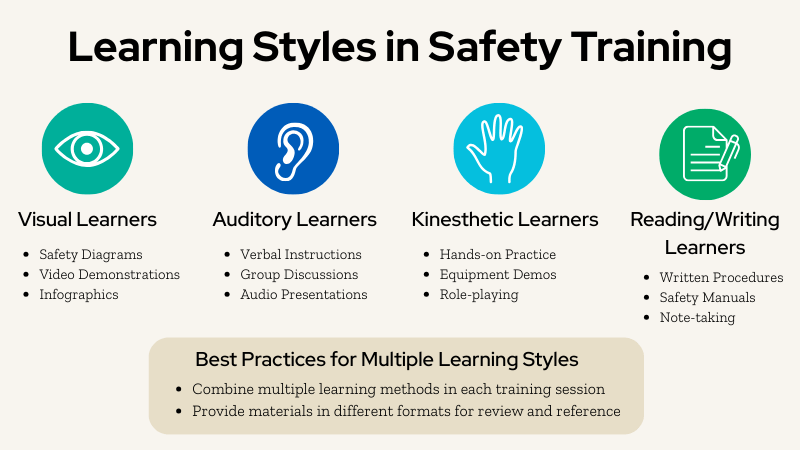
Safety training needs to accommodate visual learners who prefer diagrams and demonstrations, auditory learners who benefit from verbal instruction and discussion, and kinesthetic learners who need hands-on practice. Effective safety training programs account for all these styles by:
- Incorporating multiple learning elements for each concept
- Providing materials in various formats for review and reference
- Allowing learners to engage with content at their own pace
- Accommodating different experience levels and backgrounds
By recognizing and addressing these different learning styles, organizations can ensure that their safety training resonates with every employee, regardless of their preferred learning style.
Ready to enhance your safety training program? Here are concrete steps to get started:
- Assess current programs: Evaluate existing training methods and identify gaps
- Gather feedback: Talk to employees about their learning preferences and needs
- Develop multi-format content: Create varied training materials that accommodate different learning styles
- Implement tracking systems: Set up mechanisms to monitor participation and effectiveness
- Schedule regular reviews: Plan periodic assessments to ensure continuous improvement
- Train the trainers: Ensure instructors are well-prepared to deliver engaging, effective training
Remember, effective safety training is an ongoing process, not a one-time event. By following these best practices and regularly evaluating and adjusting your approach, you can create a training program that truly reaches and engages your frontline workers, ultimately leading to a safer workplace for everyone.
Looking to enhance your safety training program?
Contact our team to learn how Novara can help you implement these best practices and create more effective safety training for your workforce.
Related Content
Explore more comprehensive articles, specialized guides, and insightful interviews selected, offering fresh insights, data-driven analysis, and expert perspectives.


