Practical Steps for Compliance Resilience as Federal and State EHS Rules Keep Shifting
In June 2026, the Supreme Court handed down a decision that has nothing to do with OSHA, NIOSH, or the EPA — and everything to do with how they’ll operate going forward.
In Trump v. Slaughter, the Court overturned Humphrey’s Executor, the nearly century-old precedent that shielded independent agency leaders from being fired without cause. Presidents can now remove the heads of agencies like the FTC and the NLRB whenever they choose, for any reason or none at all.
Harvard Business Review‘s read on the ruling is direct: expect less certainty, less consistency, and rules and enforcement shaped more by political timing than by expert judgment.
OSHA, NIOSH, and EPA aren’t structured like the commissions Slaughter is actually about. But if you’ve been watching federal EHS infrastructure this year, the pattern the ruling accelerates is already familiar. Two agencies at the center of your compliance program spent 2026 proving it.
What the ruling actually changes
Strip Slaughter down to what matters for EHS programs and three things stand out. Consistency across administrations disappears, since a new president can reshape agency leadership and priorities immediately instead of waiting out a fixed term. Oversight from Congress and the courts shrinks, because removal power that used to require documented cause no longer does. And expert judgment loses institutional protection, since staff and appointees now serve at the pleasure of whoever holds the office, not a stable statutory mandate.
None of that requires a Supreme Court ruling to show up inside an EHS-adjacent agency. It’s already happening. NIOSH and EPA spent the first half of 2026 demonstrating exactly this kind of volatility, without needing Slaughter’s holding to apply to them directly.
NIOSH’s whiplash year
Start with NIOSH. In April 2025, the agency lost roughly 875 of its approximately 1,000 employees, cutting the specialized staff who support agricultural, mining, and fishing worker safety research. A follow-up budget proposal would have cut as much as 80% of what remained.
Then, on January 13, 2026, HHS reversed course and reinstated more than 600 NIOSH employees. The Senate Appropriations Committee went further, recommending $363.8 million for NIOSH in FY2026 — an increase over FY2025 — just months after the House had recommended a 14% cut.
That reversal is real progress. It’s also not recovery. Research paused for the better part of a year doesn’t resume on schedule, and NIOSH has acknowledged that many former staff — including senior researchers with institutional knowledge no one else has — have already moved into other roles and aren’t coming back. NIOSH is also the sole certifying body for N95s and other respirators, which makes its staffing stability a direct, practical concern for any program that depends on PPE certification continuity, not just an abstract research-funding story.
Rebuilding what was lost will take years. Restoring the org chart took nine months.
EPA: rules, leadership, and procedure, all at once
EPA’s 2026 has been quieter than NIOSH’s, but no less telling. On February 24, the Agency proposed rolling back major pieces of the 2024 Safer Communities by Chemical Accident Prevention rule, including the requirement that facilities assess whether safer chemicals could replace hazardous ones, and provisions for third-party audits after incidents. The same funding cycle pushed EPA toward a narrower role in regulating workplace chemical exposure, deferring more of that ground to OSHA.
Leadership changes are moving just as fast. Tom Croci’s appointment as acting head of EPA’s Office of Land and Emergency Management put new leadership over Superfund, brownfield, and emergency-response programs — the kind of personnel change that can redirect cleanup enforcement priorities as fast as any rule change, and without a public comment period.
EPA has also proposed centralizing and speeding up how citizen-suit notices get filed, a procedural shift that gives the Agency more room to step in and preempt private lawsuits before they’re filed. None of this is deregulation in the simple sense. It’s enforcement discretion shifting toward appointed leadership rather than institutional staff — precisely the dynamic Slaughter opens the door to everywhere else in the federal government.
The one agency built specifically to investigate chemical accidents independent of EPA and OSHA has spent much of 2026 navigating repeated funding threats: the Chemical Safety Board has faced elimination proposals four times, including this year, and secured funding through Congress’s January 23 spending bill rather than any standing protection against future cuts.
The throughline
None of these are isolated stories. EHSLeaders’ April 2026 analysis of EPA’s enforcement shifts summed up the pattern bluntly: enforcement authority “isn’t disappearing—it’s being redistributed across federal regulators, states, and private actors.”
That’s the throughline connecting NIOSH and EPA, and it’s the throughline Slaughter accelerates across the rest of the federal government. Continuity of expert judgment is giving way to continuity of whoever currently holds the office. For an EHS program built around the assumption that federal standards and federal research move slowly and predictably, that assumption no longer holds.
States and Courts Step In
As federal priorities shift, other actors are stepping into the space. Unevenly, but with real force.
California has kept Cal/OSHA’s inspection pace steady while the federal picture shifted, and SB 606 now lets a systemic violation pattern at one facility trigger citations across every facility a company operates in the state — a materially more aggressive posture than federal OSHA’s per-establishment approach.
Maryland’s heat illness standard has been in effect since 2024, while the federal heat rule remains stalled with no target date, and MOSH is now developing a workplace violence prevention standard under the Davis-Martinez Act. Oregon runs its own OSHA-approved state plan with authority to exceed federal requirements, and already has both a heat rule and one of the few wildfire-smoke standards in the country — covering a hazard federal OSHA doesn’t regulate at all. New York has kept its environmental enforcement active through the same period, and states have a track record of adopting California’s rules on heat, ergonomics, and violence prevention within 12 to 24 months of California acting first.
Litigation is filling gaps too. A coalition of 24 states and 10 cities is suing EPA over its repeal of the endangerment finding underlying federal climate rules. In New Jersey, the Willingboro Municipal Utility Authority is suing Methode Electronics under the Superfund law, seeking to shift the cost of PFAS and 1,4-dioxane contamination cleanup from taxpayers to the companies responsible. Enforcement that doesn’t happen in Washington is increasingly happening somewhere else — a state agency, a courtroom, or both.
Building a Program That Outlasts Regulatory Whiplash
None of this is a reason to wait for the dust to settle. There’s no evidence it will, and treating this as a temporary phase is itself the risk. Building a program that outlasts regulatory whiplash — federal or state — starts with three practical shifts.
First, build around what you control, not around which administration currently holds a given office. If you don’t have a heat illness policy because the federal rule hasn’t shipped, the absence of a federal rule was never the reason to wait. Second, treat NIOSH’s staffing, EPA’s leadership churn, and the Chemical Safety Board’s funding fights as a bellwether worth tracking every quarter, not a one-time news story. Third, don’t assume reduced federal activity in one area means reduced enforcement risk overall — it usually means the pressure moved, to a state agency, a court docket, or both.
Regulatory whiplash — federal and state alike — is going to keep swinging with election cycles and court dockets. That’s the durable lesson of 2026, not a passing one. The programs that hold up are the ones with their own stable system of record: documentation, training history, and incident data that don’t depend on any single office, agency, or administration staying intact.
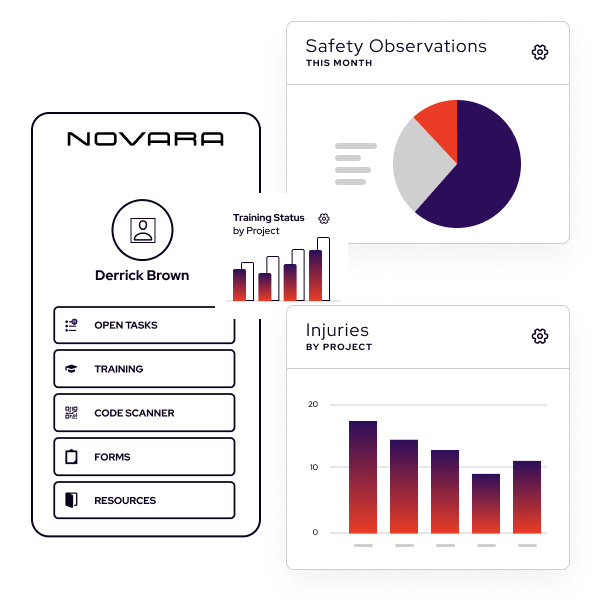
That’s what Novara is built for. Whatever comes next — in Washington or in your state capitol — your compliance record should stay yours: complete, current, and defensible, built to outlast the next round of regulatory whiplash.
Related Content
Explore more comprehensive articles, specialized guides, and insightful interviews selected, offering fresh insights, data-driven analysis, and expert perspectives.