2025 State of Safety: What's Keeping EHS Professionals Up at Night?

What’s keeping safety professionals awake at night in 2025? The latest Safety+Health “State of Safety” survey reveals the pressing concerns, persistent challenges, and emerging trends that are at the top of EHS leaders’ minds across industries. With 366 safety professionals responding, this comprehensive survey provides a clear picture of what your peers are facing—and where the opportunities lie for those ready to take action.
Top Challenges Facing Safety Professionals
The survey identified several persistent obstacles safety professionals face when improving workplace safety:
- Lack of resources (41%)
- Lack of worker engagement (38%)
- Safety viewed as a burden or productivity drain (32%)
- Lack of middle management engagement (31%)
- Lack of management/leadership commitment (29%)
These challenges aren’t surprising but highlight the importance of making safety programs both effective and efficient. When resources are limited, every safety initiative needs to deliver maximum impact.
Safety Culture: Progress, But Room for Improvement
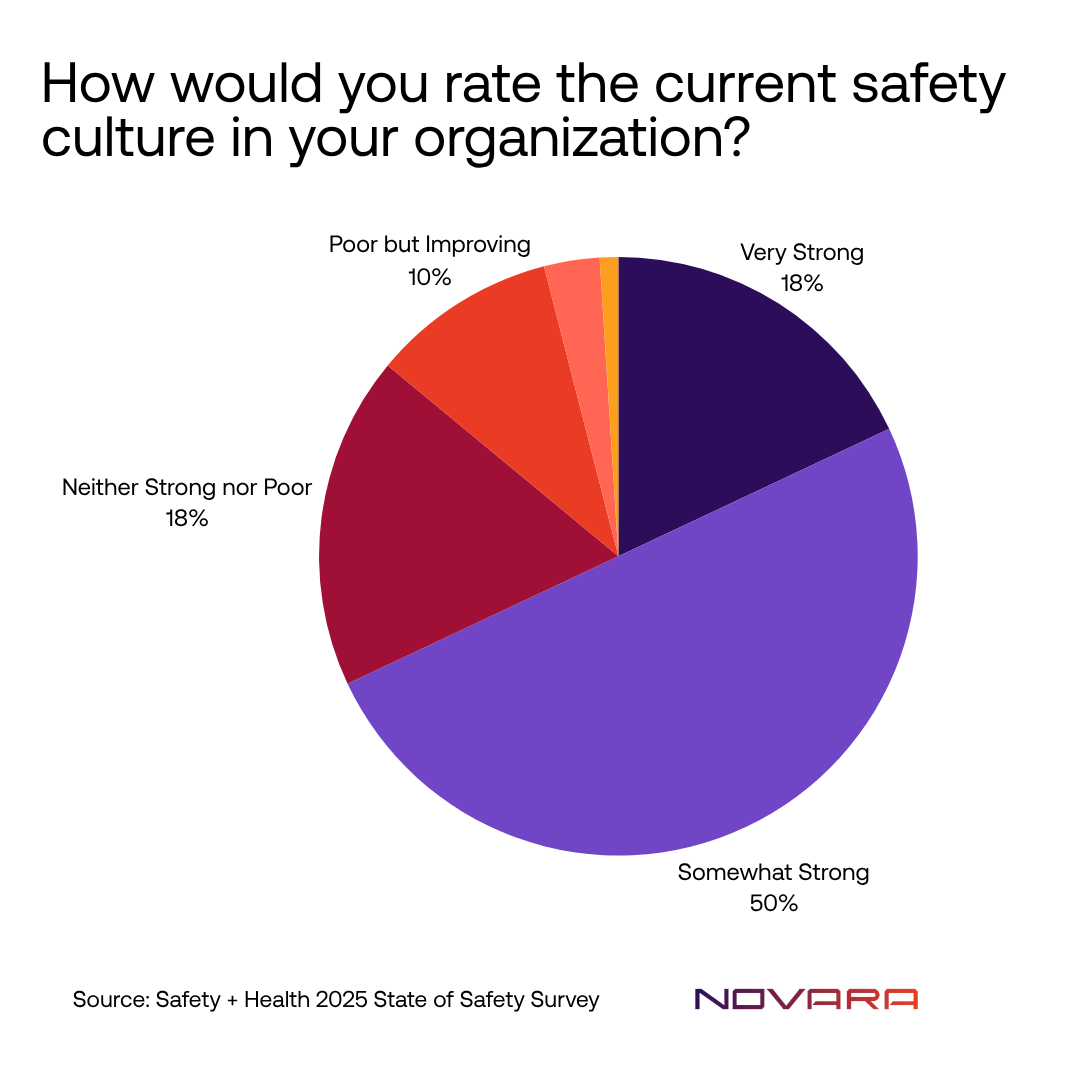
Most organizations report positive safety cultures, with 50% of respondents rating their safety culture as “somewhat strong” and 18% as “very strong.” However, that leaves nearly a third of organizations with safety cultures that could use improvement.
When it comes to engagement:
Technology Adoption
Interestingly, technology adoption for safety programs shows mixed results:
Other technologies being utilized include:
This suggests significant room for growth in implementing technology solutions that could help address resource constraints while improving safety outcomes.
Looking to the Future
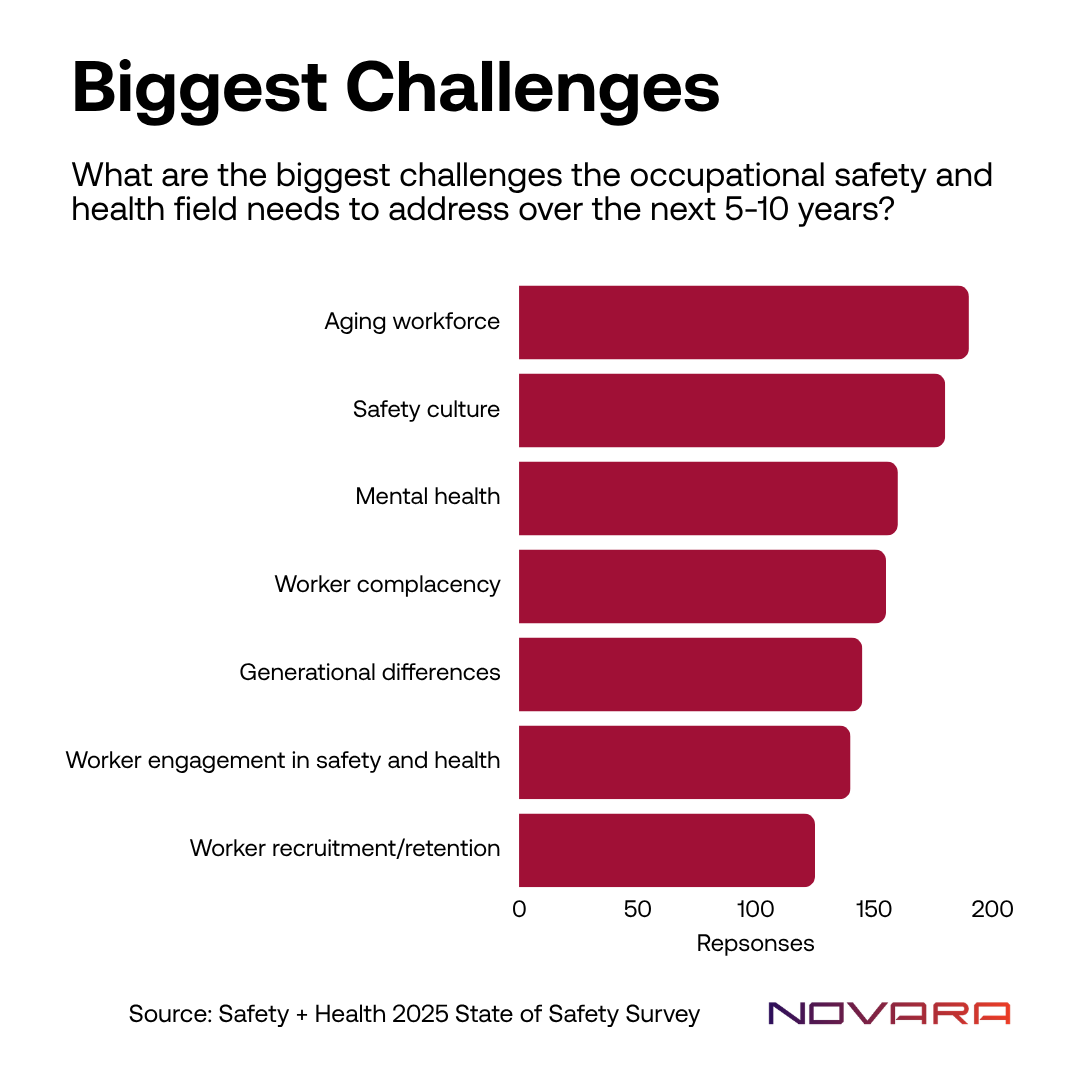
The safety profession faces several long-term challenges over the next 5-10 years:
Despite these challenges, safety professionals remain optimistic – 84% feel positive about the future of occupational safety and health. Even more encouraging, 81% believe the rewards of being a safety professional outweigh the frustrations.
Essential Skills for Success
Communication tops the list of crucial “soft skills” needed by safety professionals at 81%, followed by:
These skills highlight the people-focused nature of safety work. Technical knowledge is important, but the ability to effectively communicate and collaborate makes the real difference in building strong safety cultures.
Advice for Those Entering the Profession
Experienced safety professionals offered valuable advice for newcomers:
Get Some Sleep: Solutions to Today’s Safety Challenges
The survey results reinforce what we at Novara have long understood: successful safety programs require a combination of engaged leadership, effective resources, and a culture where safety is valued rather than seen as a burden.
Addressing the challenges that are keeping safety professionals up at night isn’t easy, but it is possible. Through improved communication, strategic resource allocation, and smart technology adoption, organizations can create safer workplaces and reduce both incidents and costs.
Are these same challenges causing you sleepless nights? Novara’s flexible software platform, expert consulting services, and comprehensive training can help you build a stronger safety culture while addressing resource constraints. Contact us to learn how we can partner with you to transform your safety program and help you rest easier.