Are your business's records and reports comprehensive and up to date? Use this cheat sheet to make sure you have the records and protocols to help your employees.
ConstructionInsuranceOil + Gas
How compliant is your organization?
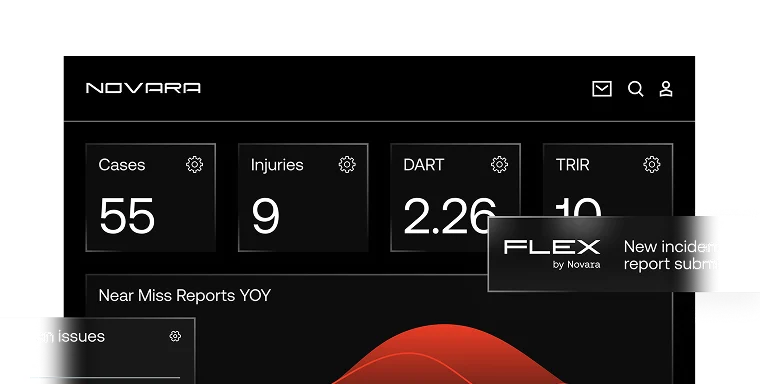
Accidents happen. When they do, you need to record information quickly to ensure both swift action and proper reporting to avoid hefty citations and potential legal action. Use Novara’s OSHA Reporting Cheat Sheet to navigate the complexities of OSHA reporting. Or, discover how you can streamline OSHA reportable accidents through Novara Flex.
The Importance of Record Keeping
Record Keeping Best Practice
Keeping track of injuries and accidents can prevent them from happening in the future
Use injury and illness data to conduct rootcause analysis
Identify trends and patterns to determine where your safety program may be insufficient and develop processes to correct and prevent future hazards
Track data and safety progress to help optimize your safety and health programs
Keep driving awareness around the importance of reporting to employees to prevent injuries, illnesses, and hazards in the workplace and reinforce safe practices
Maintain your records for five years following the end of the calendar year that these records cover.
Record Keeping Exemptions
Keep OSHA records regardless of exemption
Have 10 or fewer employees throughout the entire year? Congrats – you’re exempt from record keeping
If your organization is classified as a low-hazard industry, you may be partially exempt from record keeping. You’ll still need to comply with rules around reporting injuries. Even if you’re not required to maintain OSHA 300 logs, it’s still recommended that you do so.
Recordable Injuries and Illnesses
You must record the injury or illness if it is work-related. Consult OSHA guidelines if you are unsure whether an incident is considered work-related
You must record the injury or illness if it requires medical attention beyond first aid. Consult OSHA guidelines for examples and definitions of injuries or illnesses beyond first aid
Reportable Injuries and Illnesses
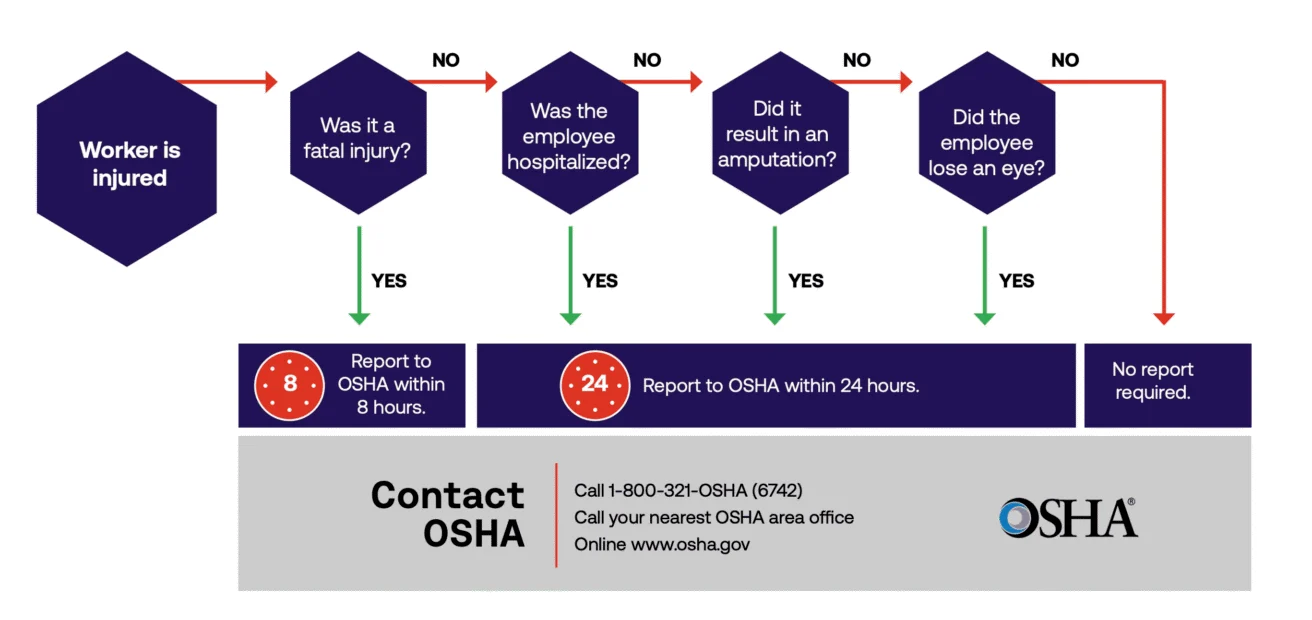
If you have a fatality on site, that case must be reported to OSHA within 8 hours
If one of your employees experiences an injury that requires in-patient hospitalization or results in an amputation or loss of eye as a result of a work-related incident, you must report it within 24 hours
If a fatality occurs within 30 days of the work-related incident, or if an in-patient hospitalization, amputation, or loss of an eye occurs within 24 hours of the work-related incident, then you must report the event to OSHA
If you do not learn about a reportable fatality, in-patient hospitalization, amputation, or loss of an eye right at the time it takes place, you must make the report to OSHA within the following time period after it’s reported:
Eight hours for a fatality
Twenty-four hours for an in-patient hospitalization, an amputation, or a loss of an eye
Ensure that you have process in place to report accidents that occur after regular business hours and/or on weekends
Determine if your organization needs to electronically report accident information to OSHA
You must submit forms 300A, 300, and 301 electronically if you have an establishment with 250 or more employees
Establishments with 20–249 employees in certain high-risk industries must also electronically submit some information to OSHA. Consult OSHA guidelines to determine if your organization needs to submit injury and illness data via form 300A
When Should I Report to OSHA?
There are many nuances when it comes to OSHA reporting, so when in doubt please reach out to a consultant or the Occupational Safety and Health Administration to help you determine the correct protocol.
Are your Incident Records OSHA Compliant?
Don’t let OSHA recordkeeping requirements take more time and energy than necessary.
Complete and file OSHA Forms 301, 300, and 300A quickly and accurately with Novara Flex. Novara’s software solutions will keep your workforce in compliance with OSHA, DOL and other regulatory standards.
OSHA citations. They’re rampant, they hide in plain sight, and they have potentially dire consequences for your people and your bottom line. OSHA citations. The OSHA Top 10 eBook contains explanations of each hazard, along with warning signs to look out for, and prevention checklists you can use to improve compliance and minimize losses.
75% of EHS and ops leaders are not confident that their data would flag the next SIF. See what separates the confident 25% in Novara's 2026 benchmark report.