The Simplicity Imperative
Have you been hesitant to adopt Safety Software? Heres a clear and simple summary of essential information about it

Executive Summary
Safety software has an adoption problem. Despite years of technological advancement and significant organizational investments, our research reveals a striking disconnect between what safety leaders need and what they’re getting from their technology.
This report presents findings from a survey of 171 safety and EHS professionals across manufacturing, construction, energy, and other hazardous industries. The data paints a clear picture: the path to better safety outcomes runs through simplicity.
The bottom line
There’s a clear gap between what safety leaders
want and what they currently have. Nearly three
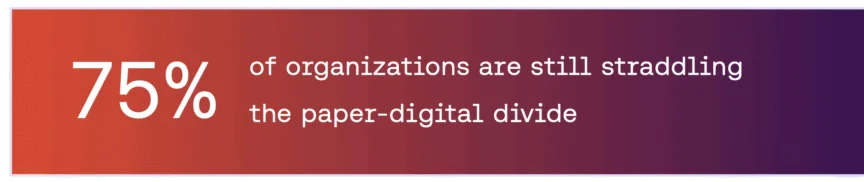
in four organizations are still straddling the
paper-digital divide, managing safety through a
patchwork of manual processes, spreadsheets,
and disconnected tools. Meanwhile, the data shows that simplicity—not features—drives the
adoption that safety programs need to succeed.
This report explores the current state of safety
technology, the challenges holding programs back, and what safety leaders across industries actually want from their technology investments.
The Current State of Safety Technology
Before exploring what safety leaders want from technology, it’s important to understand where they are today. Our research
reveals that despite decades of safety software development, true digital transformation remains surprisingly elusive.
Where organizations stand today
We asked respondents to describe their organization’s current safety management approach. The results paint a picture of an industry caught between two worlds—neither fully paper-based nor truly digital.
The adoption reality check
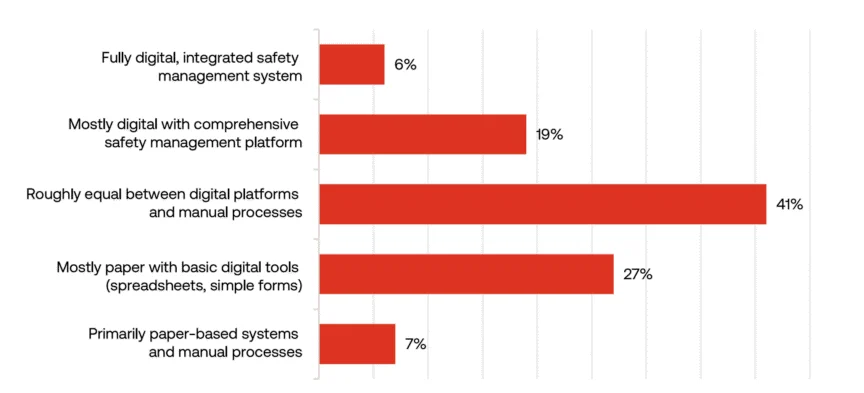
The largest segment of respondents (41%) describes their approach as “roughly equal between integrated digital platforms and reliance on manual processes.” Add in those who are mostly paper-based (7%) or using only basic digital tools like spreadsheets (27%), and a clear pattern emerges: three-quarters of organizations haven’t achieved the digital transformation that safety software has promised for years.
Meanwhile, only 6% have achieved what could be considered a fully digital, integrated safety management system. This isn’t a technology availability problem—it’s an adoption problem.
The question becomes: why? With safety software solutions readily available across every price point and feature set, what’s preventing organizations from making the leap? The answer, as we’ll explore, has everything to do with complexity
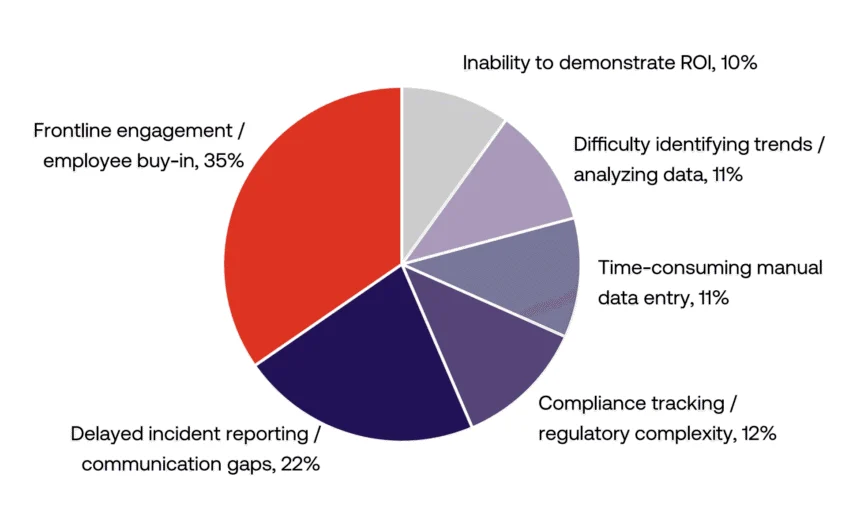
Which challenge currently has the biggest impact on your safety program effectiveness
The Challenges Holding Safety Programs Back
Understanding the barriers to safety program success requires looking at the problem from multiple angles. Our research
identified the challenges that have the biggest impact on program effectiveness—and the results reveal why simplicity matters
so much.
Challenge #1: Frontline engagement
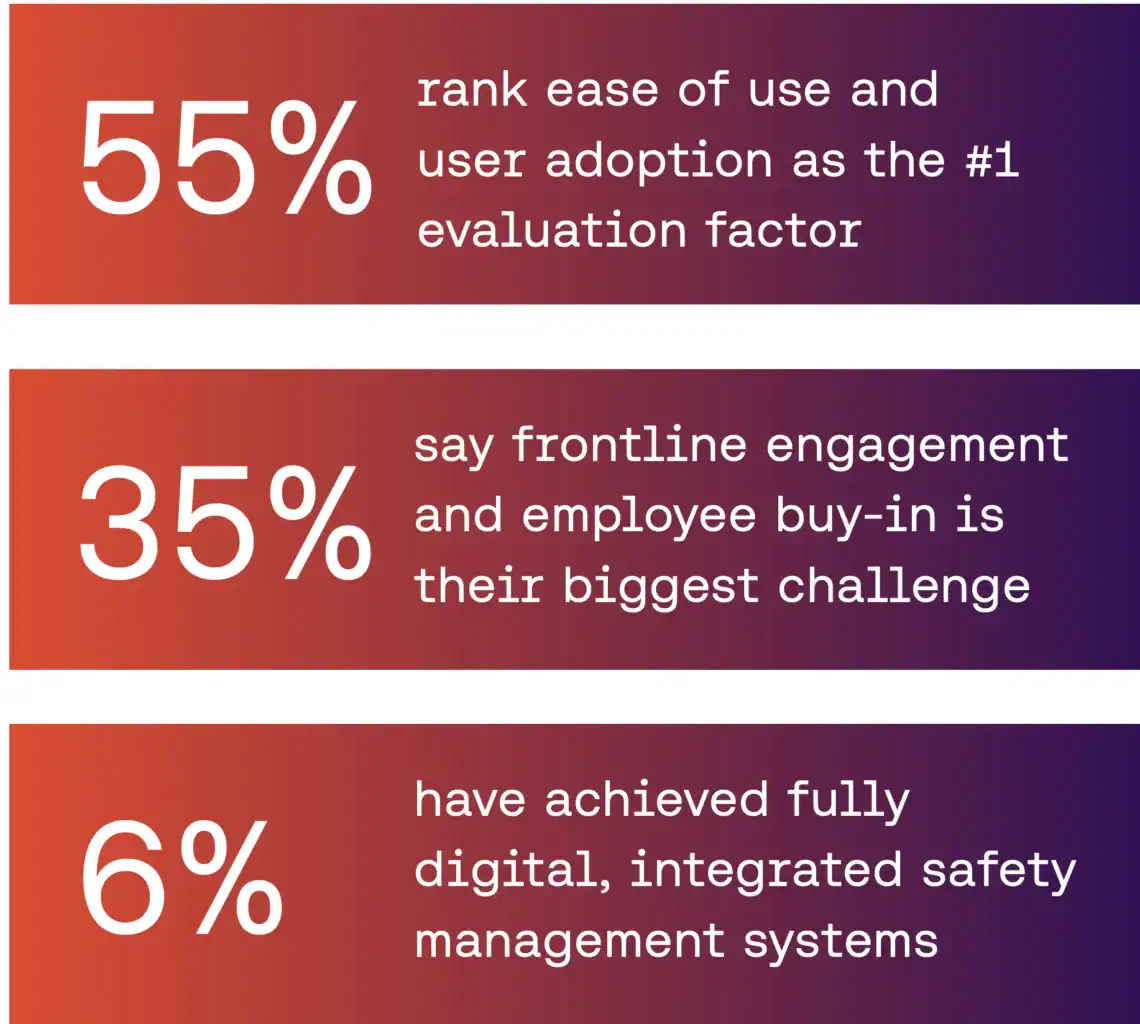
More than one in three safety leaders identified frontline engagement and employee buy-in as the single biggest challenge impacting their safety program effectiveness. This finding has profound mplications for how organizations should evaluate safety technology.
You can build the perfect safety program on paper. You can purchase the most feature-rich software platform. But if frontline workers don’t use it, none of it matters.
For Safety Directors, this challenge manifests as the daily frustration of chasing overdue tasks, fixing incomplete data, and watching carefully designed processes get ignored in the field. For Operations leaders, disengaged workers mean inconsistent execution across sites and shifts. For executives, engagement gaps translate directly into compliance exposure and liability risk.
Challenge #2: Communication and reporting gaps
Nearly a quarter of respondents (22%) cited delayed incident reporting and communication gaps as their biggest challenge. When information doesn’t flow from field to office in real-time, safety teams are perpetually playing catch-up.
This challenge is particularly acute in industries with distributed workforces— construction crews spread across multiple job sites, manufacturing operations running multiple shifts, field service teams working in remote locations. Without real-time communication tools that workers actually use, safety managers lack the visibility they need to respond to issues before they escalate.
Challenge #3: Compliance complexity
Compliance tracking and regulatory reporting complexity affects 12% of respondents as their primary challenge. For Safety Directors, this often means audit anxiety and the constant fear of missing a changing requirement. For CFOs, compliance failures represent financial risk in the form of fines and penalties. For COOs, compliance gaps can trigger operational disruptions that ripple through the entire organization.
Challenge #4: Administrative burden
Time-consuming manual data entry and report compilation drains 11% of safety teams as their primary challenge. This represents hours spent on paperwork instead of prevention—hours that could be spent identifying hazards, coaching workers, and building a proactive safety culture.
When safety managers spend more time documenting safety than improving safety, the entire organization suffers.
Challenge #5: Data and analytics gaps
The difficulty of identifying trends and analyzing safety data affects another 11% of respondents. Without clear visibility into patterns and leading indicators, safety teams can’t shift from reactive incident response to proactive hazard prevention.
Challenge #6: ROI visibility
The inability to demonstrate ROI and value of safety programs to leadership rounds out the top challenges at 10%. This creates a problematic cycle: Safety Directors need resources to improve programs, but struggle to justify investments to executives who want to see clear returns.

Which challenge currently has the biggest impact on your safety program effectiveness
What Safety Leaders Actually Want
Understanding the challenges is only half the picture. To truly address the simplicity gap, we need to understand what safety leaders prioritize when evaluating technology solutions. The answers reveal a clear shift in buyer priorities.
The ease-of-use imperative
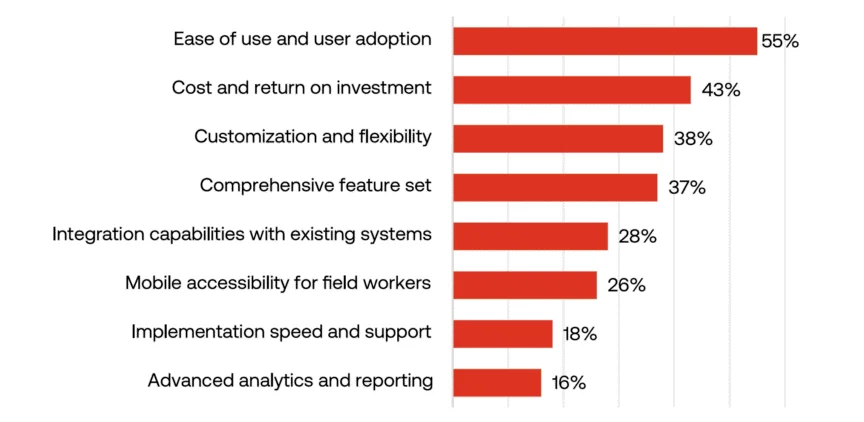
More than half of safety leaders (55%) identified ease of use and user adoption as the most important factor when evaluating safety management platforms. This outranks cost, features, integration capabilities, and every other consideration.
This finding represents a fundamental shift in how buyers evaluate safety technology. After years of purchasing feature-rich platforms that workers avoided, safety leaders have learned a hard lesson: complexity is the enemy of adoption, and adoption is everything.
What “ease of use” means to different stakeholders
For Safety Directors and EHS Managers, ease of use means fewer steps, clearer workflows, and automated reminders that eliminate manual follow-up. It means spending less time chasing tasks and more time on prevention.
For Operations leaders, ease of use translates to faster work, standardized processes, and less variability across sites and shifts. It means tools that don’t slow down crews.
For executives, ease of use means lower cost of ownership, faster rollout, and fewer failed implementations. It means ROI that actually materializes.
The true cost conversation
While cost and ROI ranks second at 43%, it’s important to understand what this really means. When we asked about the biggest concerns with safety software, cost and budget constraints topped the list at 39%.
But this isn’t simply a “cheapest wins” dynamic. The cost concern is really about value realization. Organizations have invested in safety technology before. They’ve seen implementations drag on for months. They’ve watched expensive platforms gather dust because workers wouldn’t use them. The fear isn’t spending money—it’s spending money on something that won’t deliver.
Implementation anxiety
Implementation emerges as both a priority (18% cite implementation speed as a key factor) and a concern (16% say time and resources required for implementation is their biggest worry).
Many safety managers avoid digital transformation altogether because they fear 6-12 month implementations that disrupt operations, require IT resources they don’t have, and create compliance gaps during the transition.
This implementation anxiety keeps organizations stuck in the hybrid purgatory we identified earlier—managing safety through a patchwork of manual processes and disconnected tools because the alternative seems too risky.
The mobile imperative
While mobile accessibility ranks sixth on the explicit priority list (26%), it’s inextricably linked to the #1 priority of ease of use. Safety doesn’t happen at a desk. It happens on job sites, factory floors, and in the field. When workers can’t easily access safety tools from their phones, adoption suffers.
Combined with the ease-of-use priority, the message is clear: field workers need tools that work where they work, on the devices they carry, with interfaces simple enough to use without training.

When evaluating safety management platforms whcih factors are most important
The Outcomes That Matter Most
When we asked safety leaders what measurable improvement would make the biggest impact, the responses reinforced
everything we’ve learned about the centrality of adoption.
Employee engagement leads the way
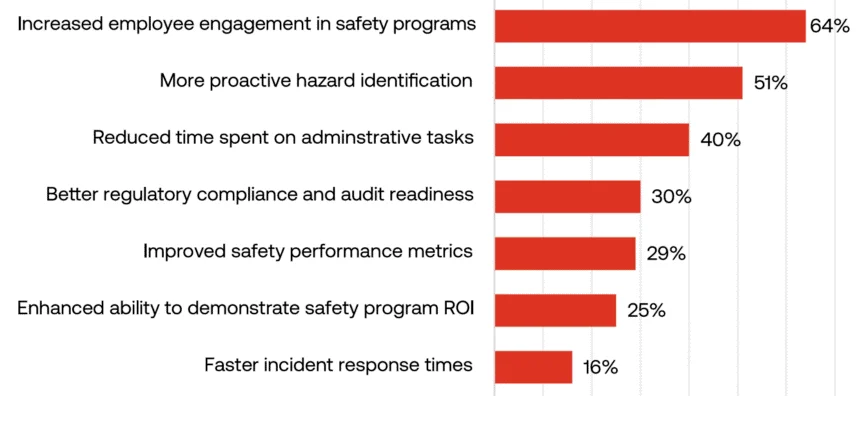
Nearly two in three safety leaders (64%) want increased employee engagement as their primary measurable outcome—the most telling finding in our entire research. They understand that technology adoption IS the goal, not just a means to an end.
Proactive prevention
More than half of respondents (51%) want more proactive hazard identification and prevention—the aspirational shift from documenting incidents to preventing them. But proactive safety requires data flowing from the field in real-time. Once again, adoption is the foundation.
Time savings
Four in ten respondents want reduced time spent on administrative tasks. When safety managers can reclaim hours previously spent on manual processes, they can reinvest that time in activities that actually reduce risk

What measureable improvement from a safety software would make the biggest impact
Bridging the Gap: What the Data Tells Us
When we connect the dots across our research findings, a coherent picture emerges. The data tells a consistent story about what’s broken in safety technology and what it takes to fix it.
The simplicity-adoption connection
The research reveals a clear chain of causation: simplicity drives adoption, and adoption drives outcomes. The path to better safety outcomes runs through simplicity. Organizations that prioritize ease of use over feature count, mobile accessibility over desktop complexity, and fast implementation over lengthy deployments are the ones who will achieve the engagement and outcomes they’re seeking.
| What They Want | Why It Matters |
|---|---|
| Ease of use (55%) | Drives the engagement they need (64%) |
| Mobile Access (26%) | Meets workers where they are |
| Fast Implementation (18%) | Overcome implementation anxiety (16%) |
The hidden cost of complexity
Our research reveals a costly cycle that many organizations are trapped in:
- Complex systems create adoption barriers
- Low adoption leads to inconsistent compliance
- Inconsistent compliance increases incident risk
- Higher risk drives up insurance, liability, and operational costs
Meanwhile, safety teams spend their time managing the complexity rather than improving safety—creating administrative burden, data gaps, and the
ROI visibility problems that make it difficult to justify better solutions.
Success criteria for modern safety technology
Based on our research, organizations evaluating safety technology should prioritize platforms that meet these criteria:
- Simple enough for day-one adoption without extensive training
- Mobile-first for field accessibility on the devices workers already carry
- Comprehensive without complexity—full functionality th rough intuitive interfaces
- Fast to implement in weeks, not months
- Clear ROI demonstration through measurable engagement and outcomes
Recommendations
Our research points to clear action items for safety leaders. Here’s how to bridge the simplicity gap.
For Safety Directors and EHS Managers
For Operations Leaders (VP Operations, Plant Managers)
For Executives (CFO, COO, CEO)
How Novara Flex delivers on the simplicity imperative
Novara Flex was purpose-built to address the exact challenges this research identifies—designed from the ground up with one question in mind: will frontline workers actually use this?
Addressing the ease-of-use imperative
With 55% prioritizing ease of use, Flex delivers intuitive workflows requiring no training. For the 35% struggling with frontline engagement, our mobile-first design puts your entire safety program in every worker’s pocket—with offline functionality, QR code access, and push notifications that remove every barrier to adoption.
Eliminating administrative burden
For safety managers drowning in paperwork, automated workflows eliminate administrative burden. Automated reminders replace spreadsheet tracking, and centralized documentation means audit prep takes minutes, not days. And for the 16% worried about implementation, Flex customers go from contract to full operation in weeks with pre-configured industry templates and dedicated support.
Consolidating the chaos
For organizations managing disconnected point solutions, Flex provides true consolidation: training, inspections, incidents, SDS, and compliance in one intuitive platform
Methodology
This report is based on a survey conducted in October 2025 by KPA and EHS Leaders. The survey captured responses from 171 safety and EHS professionals across multiple industries, company sizes, and functional roles.
Respondent profile
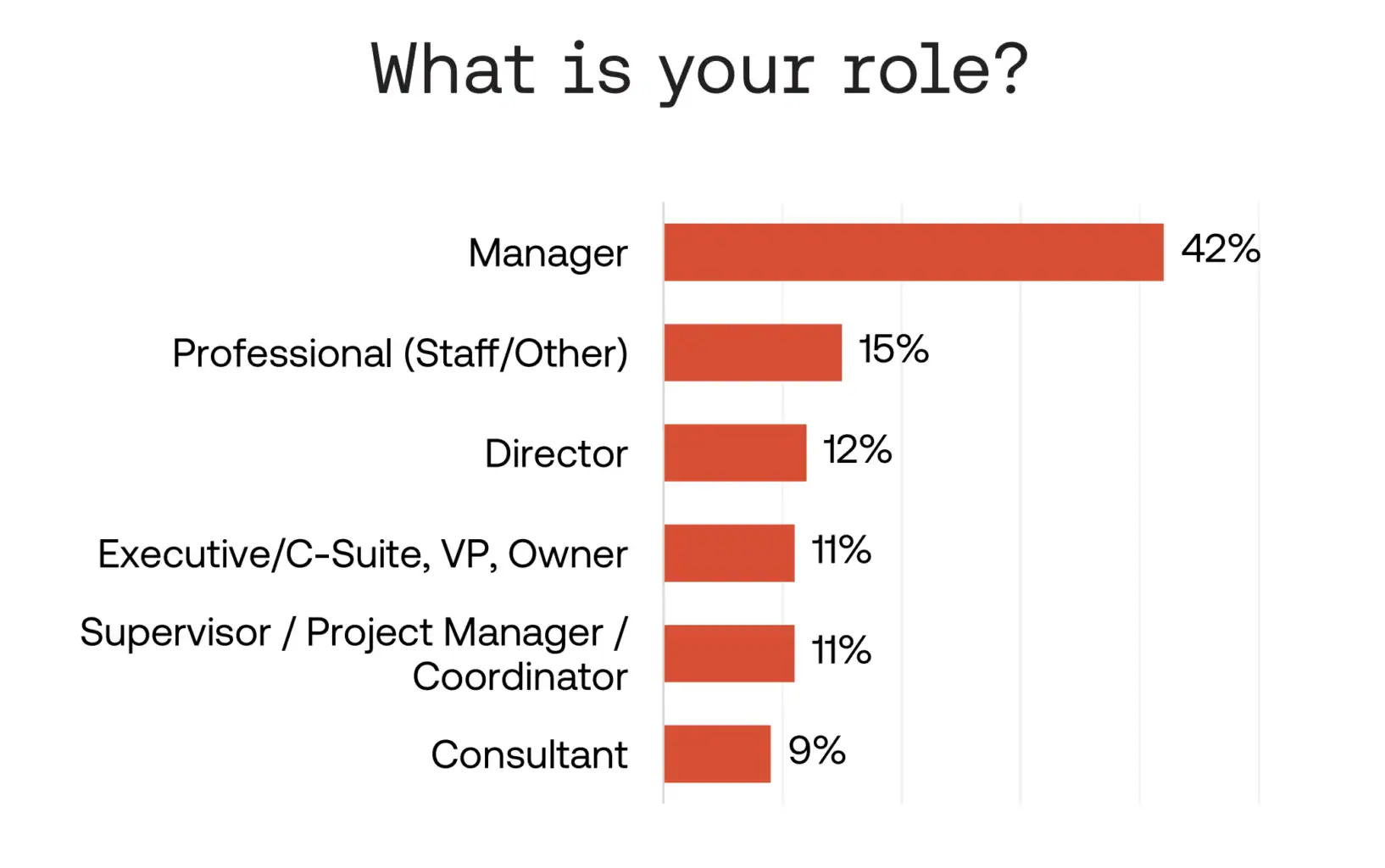
By role
Our respondents represent the professionals who live safety every day—the managers, directors, and supervisors responsible
for keeping workers safe and organizations compliant.
By functional area
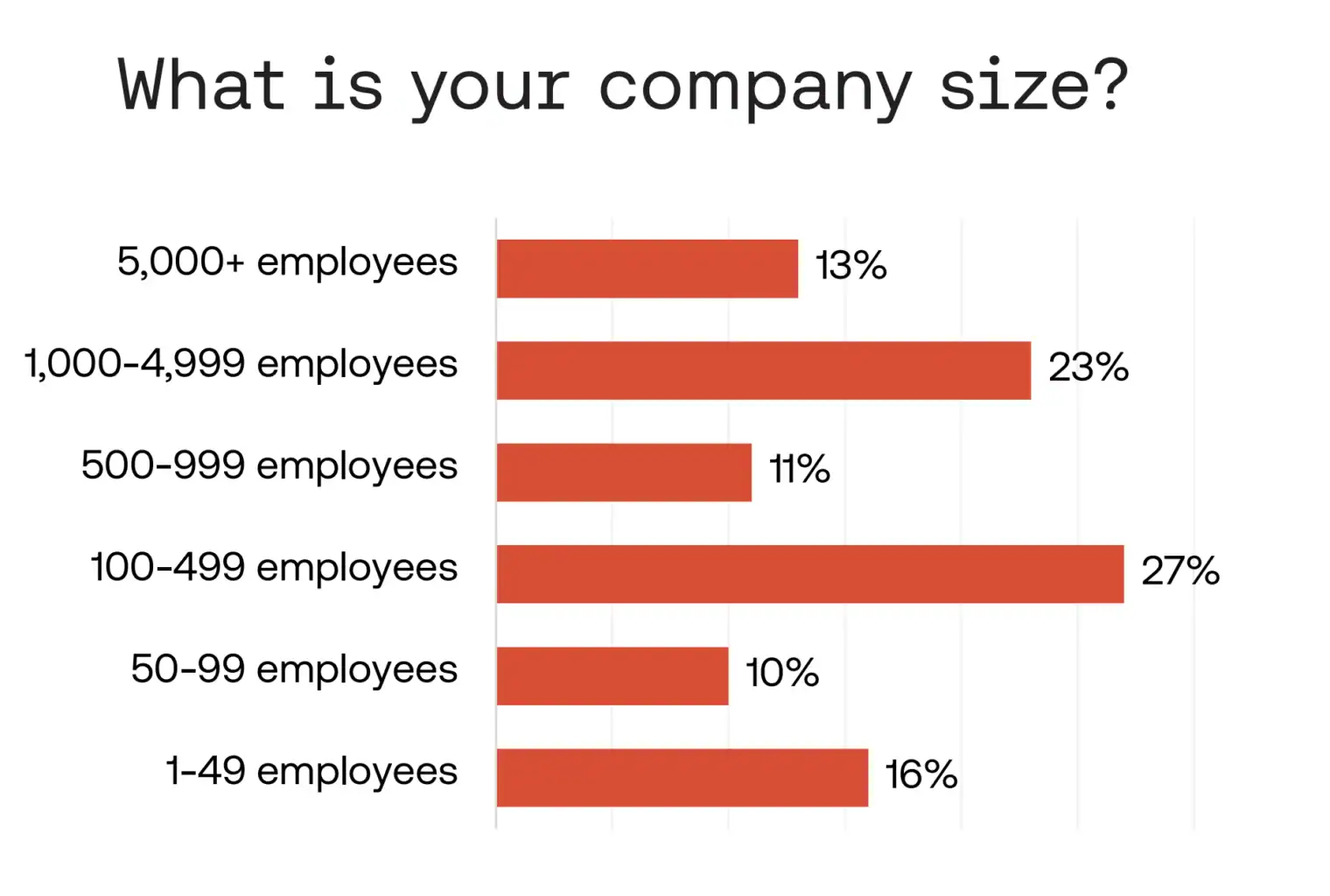
The majority of respondents work directly in EHS (40%) or Safety & Health (26%) functions, with additional representation from compliance, HR, operations, and risk management roles.
By company size
Our sample captures organizations across the size spectrum, with
particularly strong representation from mid-market companies—
the organizations often most challenged by the complexityversus-capability tradeoff in safety technology.
By industry
Respondents represent a cross-section of hazardous industries,
including manufacturing (miscellaneous, chemicals, food, fabricated metal), construction (general contractors, special trade,
heavy construction), oil and gas, utilities, and educational services.
The path forward
Simplicity isn’t about doing less. It’s about removing the barriers between good intentions and daily execution. It’s about technology that works the way people work, not the other way around.
The data from this research tells a clear story: safety leaders understand that adoption is the foundation of every outcome they’re trying to achieve. They’re no longer willing to invest in complex platforms that promise everything and deliver frustration.
The simplicity gap is real—but it doesn’t have to be permanent. Organizations that choose platforms built for adoption, not just features, are already seeing the engagement, compliance, and outcomes that have eluded them for years.
The data is clear. The path is clear. The only question is:
How will you bridge the gap?

OSHA Top 10
OSHA citations. They’re rampant, they hide in plain sight, and they have potentially dire consequences for your people and your bottom line. OSHA citations. The OSHA Top 10 eBook contains explanations of each hazard, along with warning signs to look out for, and prevention checklists you can use to improve compliance and minimize losses.

Data to Decisions 2026 Benchmark Report
75% of EHS and ops leaders are not confident that their data would flag the next SIF. See what separates the confident 25% in Novara's 2026 benchmark report.

5 Steps to Developing Your Sustainability Strategy
Developing a strong sustainability strategy doesn't have to be overwhelming — follow these five actionable steps to build a framework that strengthens your company's brand, reduces risk, and demonstrates meaningful corporate leadership.
Book A Demo
You can deliver exceptional EHS Programs with less effort. Contact us today.