Two Ways Your Safety Program Goes Blind

Ask enough safety leaders the same question and you start hearing the same answer back.
“We didn’t even know—that’s the scary part.”
– Novara Customer, Energy
He’s not describing an outlier. Across the 167 EHS and operations leaders we surveyed this year, 75% said they weren’t “very confident” their own data would flag the next serious injury or fatality before it happened. That’s a visibility gap, and it shows up in two specific, avoidable ways.
Two Ways a Program Goes Blind
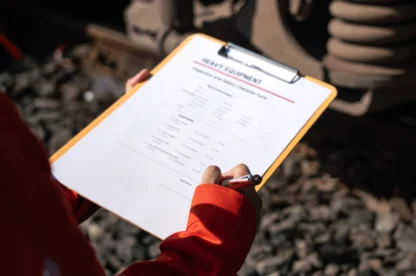
The first is the program still running on paper: JSAs in a binder, inspections on a clipboard, whatever gets filed away until someone actually needs it, at which point it’s nowhere to be found.
“JSA tracking has always been the biggest issue with us… When we would go and look for the JSA it was nowhere to be found.”
— Novara Customer, Safety & Consulting
The second is subtler, and more common than it should be: a program that’s already digitized, but only for the safety team. A system exists. Reports get filed somewhere. But if it wasn’t built to pull the frontline into using it, or to reconcile what’s happening across every site, “digital” just means the same blind spot with a login screen.
32% of programs get active engagement (hazard reports, observations, inspection participation) from less than a quarter of their frontline workforce in a typical month. Fifty-eight percent hear from less than half. Nobody built the system to make using it worth their time.
If you can’t measure participation, you can’t diagnose why it’s low, only notice, eventually, that it is.
“The main thing was participation and engagement. We had no real way to measure that. It was so manual it was impossible.”
— Novara Customer, Construction Materials
Paper or digital, both versions of invisible produce the identical symptom in the boardroom: a set of numbers that looks complete and describes only part of the operation.
“Due to having multiple locations within various states, it was difficult to verify training and inspections were being done.”
— Novara Customer, Manufacturing
The work ahead isn’t to collect more data.
Most programs already have more of it than anyone is using. The work is making the data that already exists visible: to the field generating it, to the leadership reviewing it, and to whatever system is supposed to be watching for the pattern in between.
For now, the fix starts smaller: knowing which of these two blind spots you’re actually in.
“Better visibility has allowed us to be more proactive, as opposed to reactive.”
– Novara Customer, Chemical Manufacturing
If your gut has flagged something your dashboard hasn’t confirmed yet, that gap is worth investigating. Start asking better questions of the data you already have.
Get your copy
Get The Decision Gap: 2026 Benchmark
We surveyed EHS and operations leaders to find out exactly how wide this gap runs. Download The Decision Gap: 2026 Benchmark Report to see where your program stands.