Measure What Matters
Learn how to establish effective safety program KPI's to guide your business's growth.

A Guide for Establishing Effective Safety Program KPIs
In today’s rapidly evolving workplace, the importance of maintaining a safe and healthy environment cannot be overstated.
As organizations continually strive to improve their safety standards, the role of Key Performance Indicators (KPIs) in shaping an effective safety program is more crucial than ever. These metrics not only provide a tangible way to track the effectiveness of your safety initiatives but also highlight areas that require improvement, ensuring that your organization remains committed to the wellbeing of its employees. This guide delves into the importance of choosing the right KPIs, aligning them with your safety
objectives, and avoiding common pitfalls that could detract from your program’s success. Whether you’re just starting to build your safety program or looking to refine existing measures, this comprehensive overview offers valuable insights into making your safety efforts both measurable and meaningful.
Establishing KPIs for Your Safety Program
Looking to establish KPIs for your safety program? Learn how to choose the right metrics and measure what matters to achieve your safety goals.
It is crucial to choose the right key performance indicators (KPIs) for your safety program. And while there are myriads of data points you could track, you can’t track everything. Let’s look at how you can establish KPIs that align with your safety program objectives, and avoid unintended consequences that could harm your organization. KPIs are specific measurements that help organizations track their performance and determine whether they are achieving their safety goals or not. These are the specific measurements that tell the story of how your safety program is performing. Let’s take a look at the importance of KPIs in establishing a successful safety program and explore some of the common KPIs that organizations use to measure their safety performance.
Choosing the Right KPIs for Your Safety Program
As a safety organization, it’s important to understand that reducing losses is not the only goal. There are various measurements, objectives, and goals that you need to achieve to ensure safety. Achieving this goal requires several steps and other key measurements that play a crucial role.
Here are some common safety KPIs
- TRIR
- DART
- LTIFR
- Severity
- OSHA Recordables
- Worker Participation
- Corrective Action Completion Velocity
- Employee Training Completion
- Number of CAPAs
- Number of Near Misses Reported
- Leading Indicators
- Lagging Indicators
- Number of Safety Observations
- Number of JHA Completions
- Number of Toolbox Talks
- Workers Comp Claims
- Safety Violations
- Equipment Breakdowns
Many of these are KPIs you’re tracking today because they are regulatory requirements. You’re probably tracking your OSHA recordables and capturing your TRIR.
But can you go deeper than that?
Focus on aligning your objectives and finding ways to set the right metrics as an organization. It is important to ensure that your metrics are smart and that you have a balanced mix of leading and lagging indicators. Additionally, we should not only track reactive measurements but also have some proactive measurements in place, as safety is a crucial aspect that requires a
comprehensive approach.
There’s a lot we could be tracking. But we can’t track everything.
We need key goals that align with our objectives. This will help us determine what KPIs are right for the organization. Choose less than ten KPIs that align with your objectives for your organization.
We’ve probably all heard this quote before:
“What gets measured gets managed…”
This is a quote by Peter Drucker, a business management theorist who’s written over thirty-nine books and publications. While we all remember this part of the quote, the second half of this famous line or quote often gets overlooked.
“What gets measured gets managed — even when it’s pointless to
measure and manage it, and even if it harms the purpose
of the organization to do so.”
Not everything that we can measure matters. In fact, what we measure can lead to unintended results. The wrong metrics can lead to unintended consequences.
The Cobra Effect on Safety Programs
There’s a great historical example that illustrates this point. In the early 1900s, when British colonials ruled India, they had a major problem with venomous snake bites from cobras.
So, they offered a bounty for every dead cobra in Delhi. Enterprising individuals started up cobra farms, breeding cobras to capitalize on the bounty. When the government became aware of this, they canceled the bounty program which resulted in the cobras being released or let loose into the streets as they were now worthless without the bounty system. This led to completely unintended results, a significant increase in cobras when the intention was to reduce the cobra population. This is a great example of “what gets measured gets managed.” When we offer an incentive to do something, the opposite of that result could actually happen.
Tying this back to health and safety programs, many organizations see this cobra effect when measuring days without an accident.
How could that lead to an unintended result? Well, days without an accident are tracked as a number: we’ve had so many days without an accident. We get this incentive if we hit a hundred days. Well, our workforce wants that carrot. But, let’s think about the behaviors this may encourage: the main behavior being under-reporting. I might get hurt. I might have a cut, maybe a sprained ankle. But I’m going to tough it out because I don’t want to be the one that impacts not getting that carrot and turning our date tracker back to zero days without an accident. So, unintended result. We want to encourage reporting and participation in the safety program. It’s important to set the right expectations, goals, and metrics so that we can measure the things that actually matter.
Before You Set Your Safety Program KPIs, Identify Your Objectives
Before we can identify the KPIs that are right to track for our organization, ask yourself this question: What are you trying to achieve Here are a few scenarios to consider:
We want to reduce lost time incidents
We’re having a major issue with the severity of accidents resulting in people being away from work. We want to reduce that by X percent.
We want to increase training completion.
We’ve had an issue with training compliance, which resulted in an audit, and people not understanding safety practices. We want to increase that training per participation and completion by a certain percentage.
We want to increase participation.
We want to increase reporting. We want inspections to be done. We want near misses to be reported and participation in the overall safety program. There are many different metrics we can track to evaluate participation.
We want to improve leadership visibility.
We’ve identified that leadership is not involved in our safety program. Maybe that’s because they don’t know what to be tracking. They don’t know how we’re doing. Are we making this information accessible to them?
We want to reduce
regulatory citations.
We’ve received citations from different regulatory bodies, and we want to focus on those key areas. Like, doing workplace exams.
Narrowing in on your safety program objectives makes it easier to identify the metrics to watch to understand if you’re moving the needle.
Now that we’ve discussed how to choose the KPIs that are right for your organization, we’ll dive next into getting started with measurement and putting your data to work.
When Choosing KPIs For Your Safety Program, Make Sure They’re SMART
Implementing a SMART framework for safety program KPIs can help you measure success. Learn how to create effective KPIs.
Choosing the KPIs for your Environmental Health and Safety Program ensures you’re making solid progress toward building a resilient safety culture. But how do ensure you’re measuring the things that genuinely make a difference? We suggest using the SMART framework for goal setting.
Smart KPIs are ones that are

To achieve our safety goals, we must identify what to measure and focus on impactful objectives. Progress should be measured along the way, not just at the end of the year. Let’s examine your safety programs and identify what to measure and how to ensure it has a significant impact on your safety objectives.
Why does a KPI need to be Specific?
A KPI needs to be specific to help accurately measure the progress toward a particular goal or objective. This is where we start breaking things down to be specific so that we can deliver the outcomes we’re looking for.

Let’s take TRIR as an example. Does it pass the Specific test?
It is a lagging indicator to show whether people have had those more severe injuries or not. Many company’s customers monitor and decide if they want to do business with them. It’s also a defined formula and an excellent way to compare yourself to industry benchmarks.
Consider it similar to a credit score. Most people know what a credit score means. We know the scale. Your TRIR is essentially your safety credit score for your business.
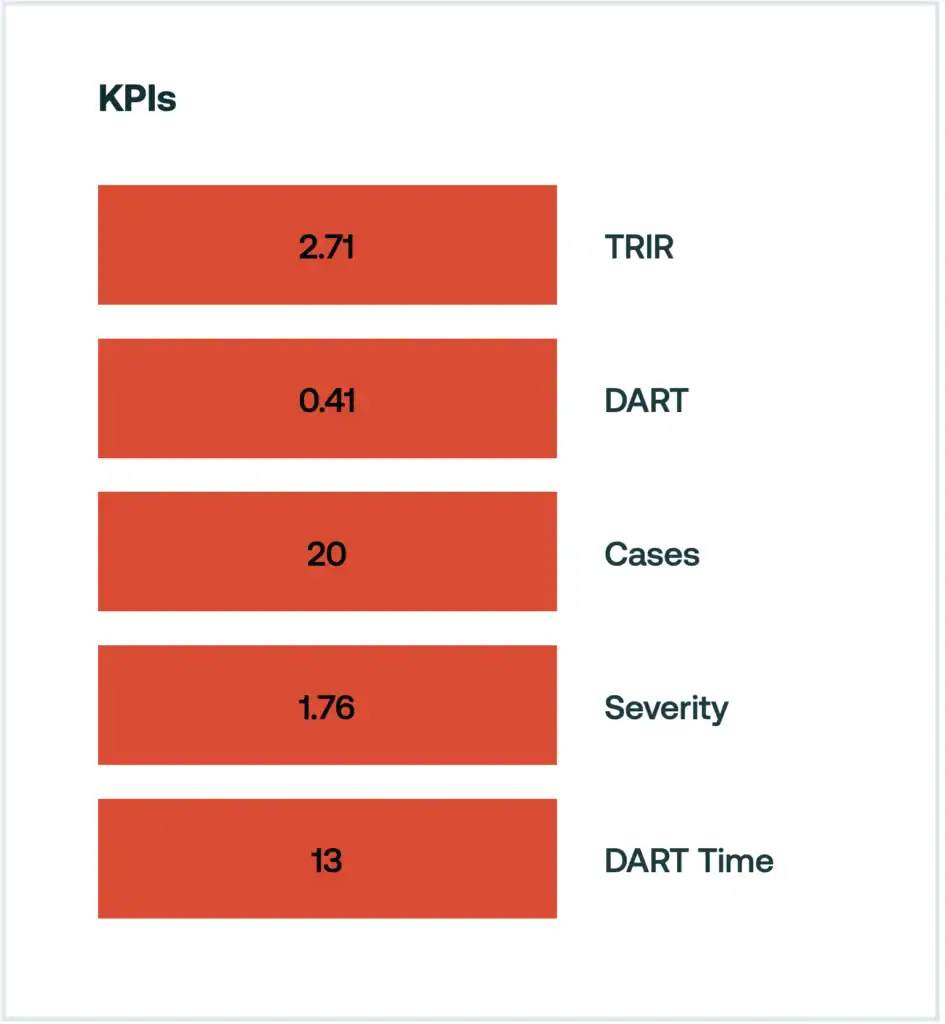
Yes! TRIR is a KPI that passes the Specific test
As an aside, just because TRIR is a lagging indicator doesn’t mean it’s not important. It is a direct correlation to performance. Let’s see if we can add some leading indicators into the mix.
Making sure your Safety KPI is Measurable
A KPI must be measurable to track progress toward objectives and determine outcomes.
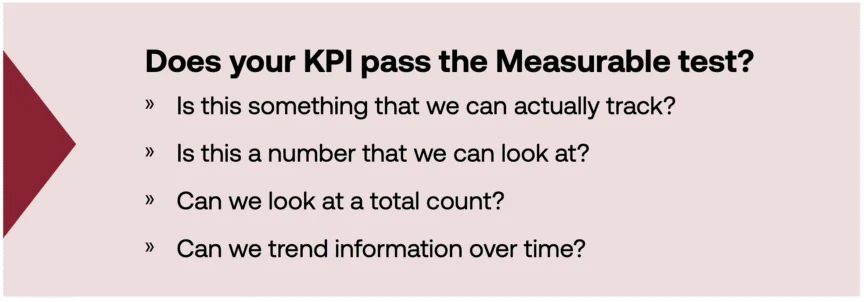
Let’s take another KPI and run it through the wringer: Near Misses
This is a leading indicator that has the potential to impact a lagging indicator like TRIR. What are some ways to use Near Miss data?
Baby Step: Near Miss Reporting Frequency
For companies just starting in their safety journey, getting your folks involved in reporting near misses is a great first step. It’s a way to get your employees comfortable reporting a near miss or safety concern without dreading the consequences. And it can be a great way to get the whole organization to become owners of safety. This becomes an involvement measurement that you can monitor over time.
Intermediate Step: Near Misses with Corrective Actions
Once employees are comfortable reporting near misses, you’ll gain a good sense of what’s going on in your workplace. The next thing to measure is whether corrective actions are being taken when employees turn those reports in.
By focusing on near misses with corrective actions, we can get a sense of whether an issue is:
Monitoring near misses with corrective actions helps your organization actually fix things – so that near miss does not turn into an accident. This helps you transition away from being reactive. You’re now looking at proactive trends.
Ensuring your SMART KPI is Achievable
We all want a zero-accident culture. We want to send people home in the same or better condition than they arrived. But we also need to make sure our goals are achievable. This involves setting realistic goals based on past performance.
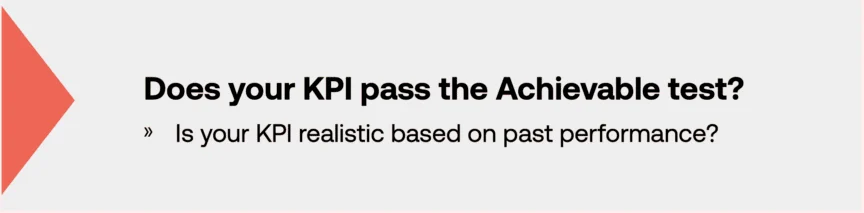
Set your safety program up for success.
If your program is in its’ infancy…maybe your employees are just submitting your misses for the first time, and you’re seeing very few corrective actions, if any. Setting a goal of 100% corrective action can be counterproductive. It’s going to be difficult for your team to buy in if they feel like they’re being set up to fail. Make sure you’re setting realistic expectations and goals.
Choosing Relevant KPIs for your safety program
Relevant KPIs help ensure that you’re measuring and sharing metrics that speak to everyone in the organization and at any level in the organization.
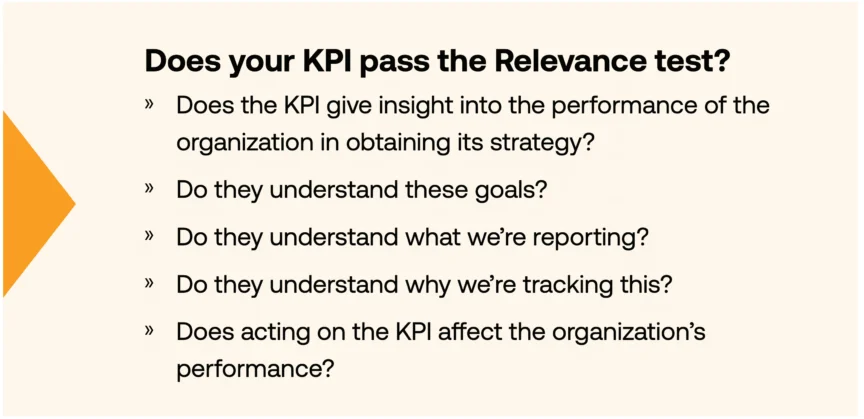
Remember that an irrelevant KPI is useless.
Many EHS software solutions fall short when it comes to relevant reporting. Often, the best you can get is a monthly or quarterly Excel data dump. When you’re sending an Excel data dump to your senior leadership, it’s not a good reflection of the efforts you’re putting into your program.
Creating Time-Based KPIs for your EHS Program
If you want to measure the true performance of your EHS program, then creating time-based KPIs is crucial.
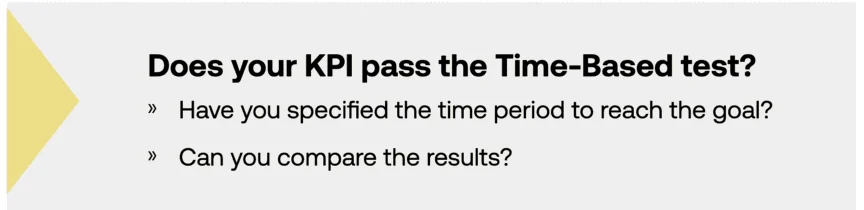
Having a point in time and tracking this information over time is critical. Consider your goal in terms of, “By this date, I’d like to meet this benchmark.” Otherwise, your program can just continue on, and you never measure its’ true performance.
Over what amount of time? Are you better this year than you were last year? Two years ago? Ten? Sometimes, you need a bigger picture to see improvement; year over year doesn’t share the whole picture.
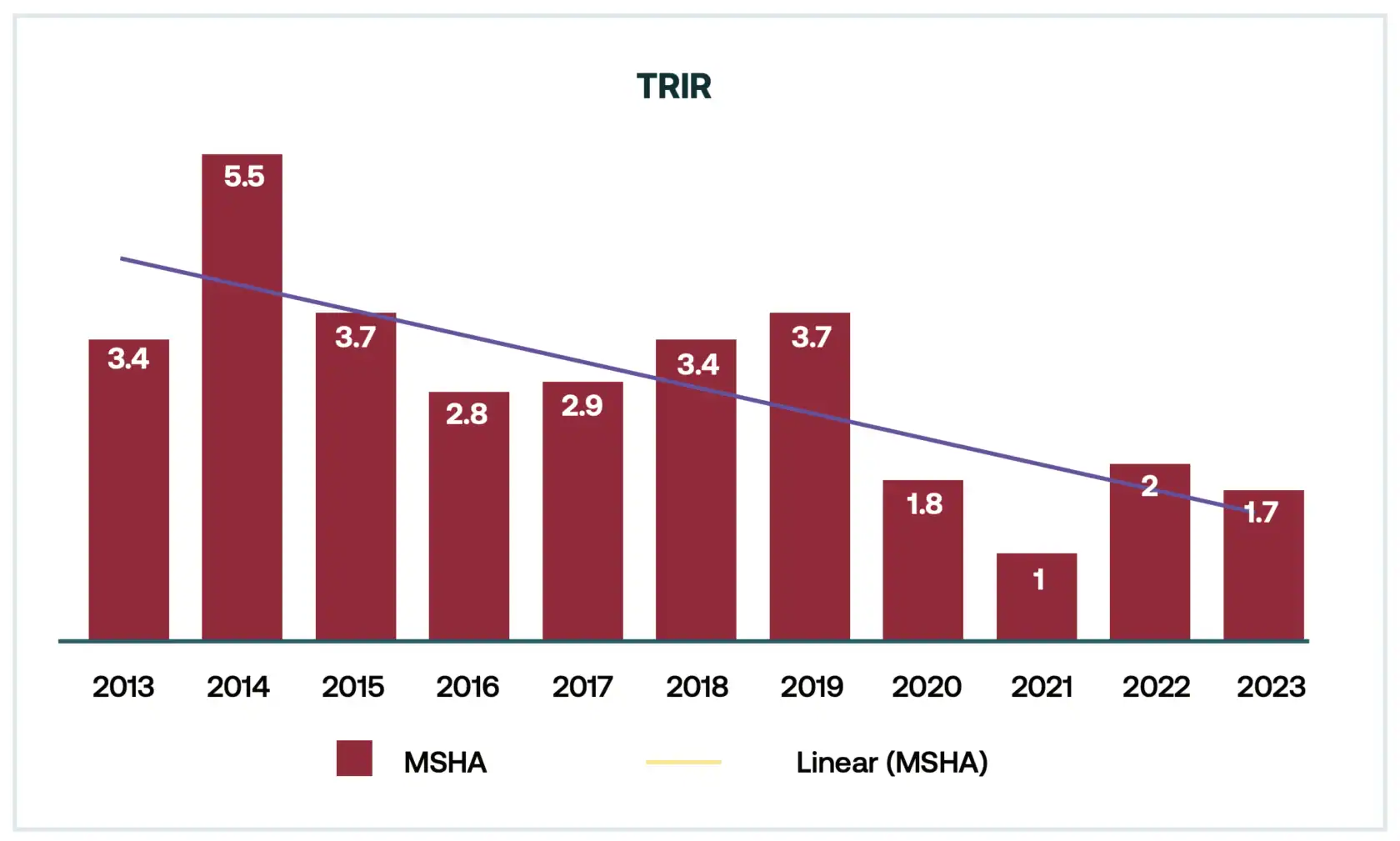
Choosing SMART KPIs for your safety program is essential to building a resilient safety culture and achieving your safety objectives.
By using the SMART framework, you can ensure that your KPIs are Specific, Measurable, Achievable, Relevant, and Time-based. It’s important to identify what to measure and focus on impactful objectives to make solid progress towards achieving your safety goals. Remember to measure progress along the way, not just at the end of the year. By setting realistic expectations and goals, you can set your safety program up for success and make significant progress towards building a safer workplace for everyone.
Using the Safety Pyramid to Measure What Matters
Discover how the Safety Pyramid can transform workplace safety. Learn to
reduce risks by focusing on indicators for a safer, proactive environment.
In today’s fast-changing work environments, keeping employees safe is a top priority. There are many ways to improve safety, but the Safety Pyramid is a clear and practical framework that stands out. This concept not only categorizes different types of incidents based on their severity and frequency but also offers a strategic roadmap for organizations aiming to minimize risks and protect their workforce. By focusing on the foundational elements at the bottom of the pyramid and understanding the intricate relationship between leading and lagging indicators, companies can initiate a culture change towards safety that not only prevents serious injuries and fatalities but fosters a proactive safety mindset among employees. Let’s talk about the Safety Pyramid and why it’s important. We’ll look at its parts and how focusing on important safety measures can lead to success.
What is the Safety Pyramid?
The Safety Pyramid is a framework used to help improve workplace safety by organizing incidents based on how often they happen and how serious they are.
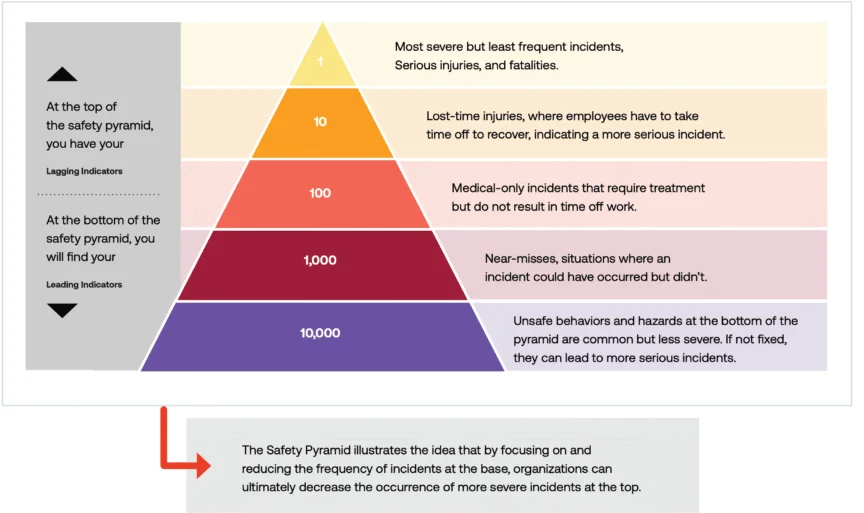
Focus on the Bottom of the Safety Pyramid for Long Term Success
By tracking the leading indicators located at the bottom of the safety pyramid, we can achieve positive results that impact the top of the pyramid. Understanding our near misses, unsafe behaviors, and hazards is important, as they help us mitigate risks at the top of the safety pyramid. Taking proactive measures to enforce change is our core objective, as it leads to the elimination of serious injuries, fatalities, and lost-time incidents.
Examples of Bottom of the Safety Pyramid Metrics to Track
Organizations can prevent accidents by focusing on the bottom of the Safety Pyramid. This involves addressing unsafe behaviors and hazards early on. By doing so, the chance of serious incidents happening at the top is reduced.
How to Get Started Using the Safety Pyramid
to Measure What Matters
Here’s how one Novara client did it.
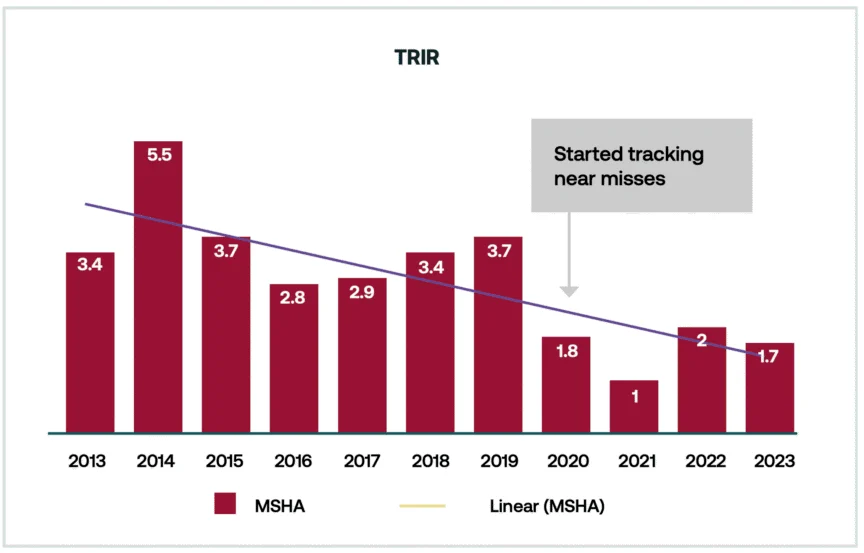
- The organization went on a culture change journey in 2013 and realized they were only measuring lagging indicators.
- They started measuring leading indicators such as near-miss reporting and safety meetings to impact their lagging indicators positively.
- The organization involved the whole team in reporting near misses, and this had a positive impact on lagging indicators.
- They found that focusing on leading indicators helped improve their lagging indicators.
- The organization realized the importance of both leading and lagging indicators, and they need to work together. The chart from 2019 shows the correlation between capturing leading indicators and the reduction of lagging indicators.
How can a company get started if they are not doing anything today or if there are no specific measurements besides regulatory reporting? Here are four steps to get you off on the right foot.

Step 1:
Get leadership involved
It’s important to involve leadership in goal-setting, not just getting their approval. They should be an active part of the process because many actions will need to be taken and their support is vital. Simply signing off on something is not enough.
Step 2:
Understand your data gaps and make a plan to fill them.
It’s important to identify what data is available to report on and what data is missing.
First, take a step back and evaluate your organization to determine which metrics you want to measure based on your current baseline.
Next, start identifying any data gaps and processes needed to fill them in (which can be a challenging task.) Many companies have lagging indicators that they report to government agencies, such as TRIR, DART, LPR, and workers’ compensation dollars. That may be all you have, which is fine.
But, what metrics are missing? What do you need to measure that you’re not currently measuring? Is it risk assessments, behaviors that need to be incentivized, participation, or a culture change regarding safety? Or do you need to increase reporting across the board?
Step 3:
Engage Your Front-Line Workers
One of the major issues new Novara customers face is that employees do not trust their reporting system and feel their concerns aren’t being addressed.
Employees were hesitant to report incidents on paper, as they often didn’t reach the appropriate departments or supervisors.
New customers often come to Novara because they need a digital tool that can help employees report incidents quickly and easily. That’s where Novara Flex’s mobile app comes in and allows employees to report incidents instantly, no matter where they are.
After introducing the mobile app, one Novara client’s reporting numbers skyrocketed from 23 to over 6,000. This was a clear indication that employees preferred the convenience of using their phones to report incidents.
Step 4:
Make the Most of Your Data
The first step in making the most of the data collected is to share it with all stakeholders in the organization, not just the executive team. This ensures that everyone is aware of the relevant information and can learn from it. Consider sharing the data through weekly, quarterly, and annual reports and training sessions.
To reinforce positive behavior, many Novara clients have recognition programs for employees who excel in areas such as submitting the most safety concerns and corrective actions. Consider recognizing employees who have potentially saved a life through near misses. You can also submit your employees for national awards or give out company awards at annual trainings.
Some Novara clients also incorporate safety performance into employee evaluations, making it an integral part of the performance review process. It’s a great opportunity if you notice a trend of poor safety performance in a particular location, to have conversations with the employees involved to hold them accountable and address the issue.
Overall, there are many ways to use the data we collect, but the focus should be on making it relevant to everyone in the organization and holding people accountable for their actions.
20 Questions to Make Sure You Measure What Matters
Are you effectively measuring what matters in your safety program? Ask yourself these targeted questions to uncover strategies for ensuring your safety metrics are relevant, practical, and capable of driving significant improvements in workplace safety.
Alignment with Safety Objectives
SMART Criteria
Balance of Indicators
Employee Engagement
Practicality and Relevance
Avoiding Unintended Consequences
Measuring the Right Things
Continuous Improvement
Cultural Fit
Technology and Tools
How Novara Helps You
Measure What Matters
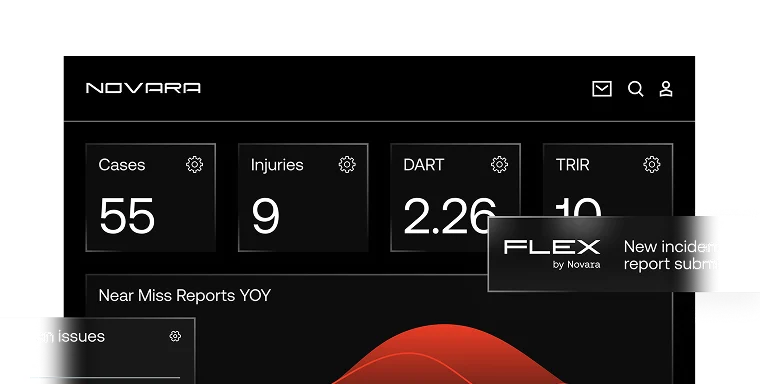
Novara simplifies data visualization and reporting, giving users easy access to actionable insights into their EHS program performance. Your data is presented in real time, so no delay or extra steps are required to access the information. The dashboards are configured based on features tailored to your business’s unique requirements, giving you the power to make informed decisions that impact workplace safety.
Let Novara show you how to take a data-driven approach to safety.

OSHA Top 10
OSHA citations. They’re rampant, they hide in plain sight, and they have potentially dire consequences for your people and your bottom line. OSHA citations. The OSHA Top 10 eBook contains explanations of each hazard, along with warning signs to look out for, and prevention checklists you can use to improve compliance and minimize losses.
Data to Decisions 2026 Benchmark Report
75% of EHS and ops leaders are not confident that their data would flag the next SIF. See what separates the confident 25% in Novara's 2026 benchmark report.

The Simplicity Imperative
Have you been hesitant to adopt Safety Software? Heres a clear and simple summary of essential information about it
Book A Demo
You can deliver exceptional EHS Programs with less effort. Contact us today.