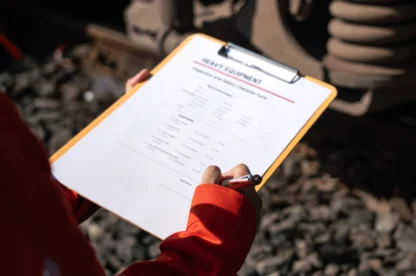
Do You Know What PPE You Need? Take this PPE Assessment to Find Out

Although personal protective equipment (or PPE for short) should be considered one of the last lines of defense against workplace hazards, it is still essential to keep workers safe. Use this PPE assessment to help determine what equipment is needed.
Assess Hazards and Determine PPE
Before any job, employers must assess what hazards are present and what PPE should be used.
Employers should take the following steps during this assessment:
- Identify what hazards are present on the job site.
- Select the appropriate PPE for each affected employee in each category below, and ensure the equipment’s availability.
- Communicate the PPE requirements to employees.
- Ensure PPE fits each employee properly. Provide properly fitted PPE.
- Conduct and document training.
Types of PPE
Eye or face hazards can include flying particles, molten metal, liquid chemicals, acids or caustic liquids, chemical gases or vapors, potentially infected material, or potentially harmful light radiation. Employers must ensure employees wear appropriate and properly fitted eye and face protection. Prescription lenses and contacts are not sufficient protection against most hazards.
When employees must work in environments with insufficient oxygen or where harmful dusts, fogs, smokes, mists, fumes, gases, vapors, or sprays are present, they need respirators. These health hazards may cause cancer, lung impairment, other diseases, or death.
Hard hats fall within three categories.
Hard hats must fit properly and not bind, slip, fall off, or irritate the skin.
Foot and leg protection should be employed when falling/rolling objects and crushing/penetrating materials are present. Employees should also use this protection in the presence of hot, poisonous, or corrosive materials. Options for protection include leggings, metatarsal guards, toe guards, combination foot and shin guards, and safety shoes.
Hazards affecting the hands and arms include skin absorption of harmful substances, chemical or thermal burns, electrical dangers, bruises, abrasions, cuts, punctures, fractures, and amputations. Protective equipment includes gloves, finger guards, and arm coverings or elbow-length gloves.
Hearing protection is required in the presence of loud and sustained noises. Protections include single-use earplugs, Pre-formed or molded earplugs, and earmuffs.
PPE Hazard Assessment
OSHA mandates a Hazard Assessment to determine what PPE is necessary. When looking for hazards, consider both the workplace and the necessary tasks. Remember, controlling a hazard at its source is the best way to protect employees.
List potential hazard sources caused by:
Selecting PPE
Following a walkthrough, employers should organize and analyze the data. Consider the movement of workers. How do they interact with the hazards you have identified? Research the PPE options available and ensure that the selected PPE exceeds the minimum level of protection.
Employee Training for PPE
Each employee must be trained in the proper use of their PPE. Employee’s minimum knowledge of PPE should include:
Need help assessing hazards and training your employees? Novara has you covered!
Novara’s unique combination of software, training, and consulting services can provide the coverage your people and your organization need. For more information and guidance about PPE protection violation, please contact us.